
Satipo Approves Historic Ordinance: In World First, An Insect Is Granted Legal Rights
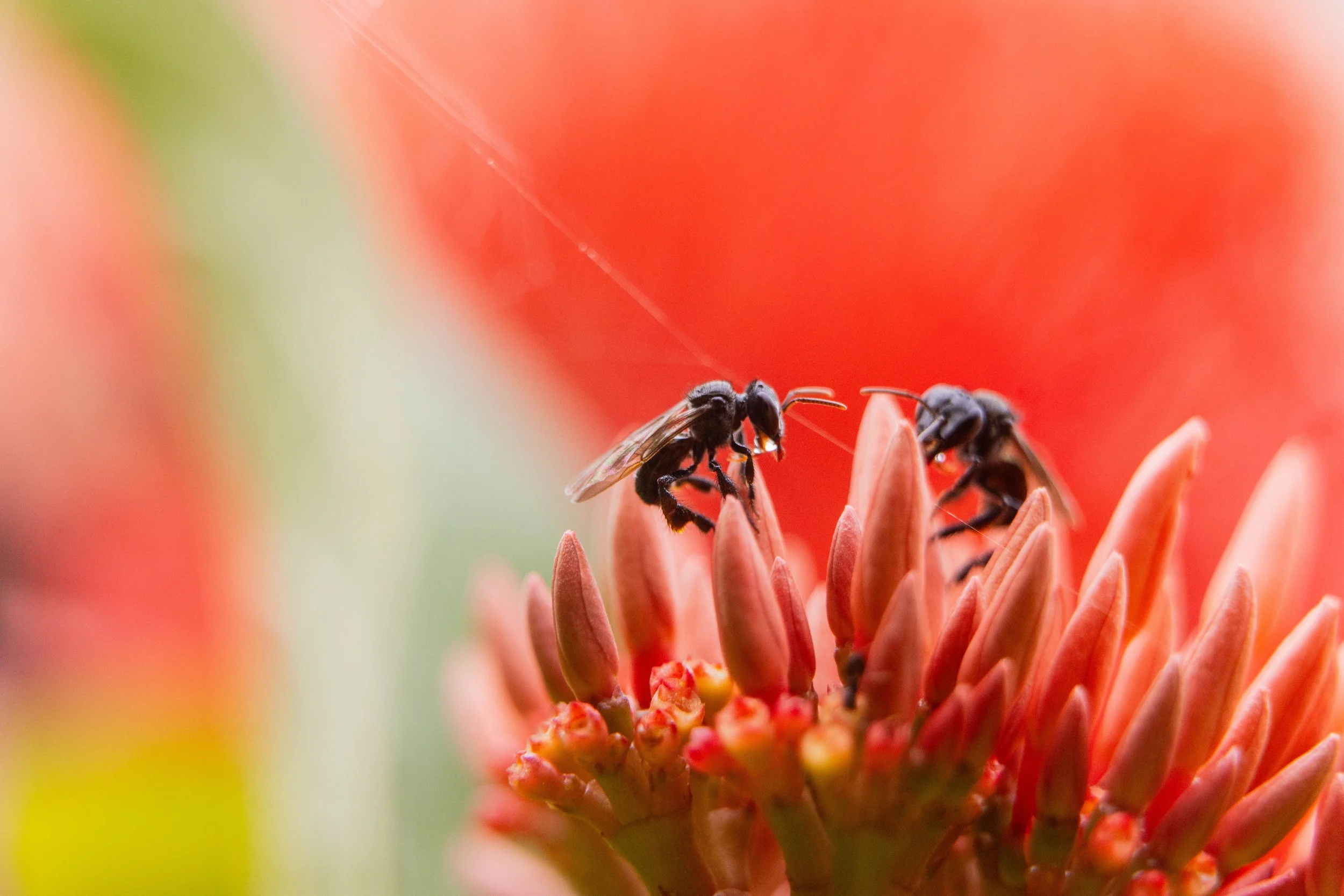
In an unprecedented legal development, the Provincial Municipality of Satipo, Peru has approved Municipal Ordinance No. 33-2025-CM/MPS, which grants legal rights to native stingless bees within the Avireri VRAEM Biosphere Reserve. These insects—the oldest bee species on the planet, and which are responsible for pollinating over 80% of Amazonian flora, including globally cherished crops like coffee, chocolate, avocados, and blueberries—are now formally recognized as beings with inherent rights. This is the first formal recognition of rights for an insect in history, a revolutionary step in protecting Peru’s biodiversity and biocultural heritage.

PRESS CONTACTS
Constanza Prieto Figelist, Director of the Legal Program for Latin America, Earth Law Center, cpfigelist@earthlaw.org (English/Spanish)
Rosa Vásquez Espinoza, Executive Director, Amazon Research Internacional, contact@rosavespinoza.com (English/Spanish)
In a precedent with no equivalent worldwide, the Provincial Municipality of Satipo has approved Municipal Ordinance No. 33-2025-CM/MPS, which grants legal rights to native stingless bees within the Avireri VRAEM Biosphere Reserve. These insects—the oldest bee species on the planet, and which are responsible for pollinating over 80% of Amazonian flora, including globally cherished crops like coffee, chocolate, avocados, and blueberries—are now formally recognized as beings with inherent rights. This is the first formal recognition of rights for an insect in history, a revolutionary step in protecting Peru’s biodiversity and biocultural heritage.
The ordinance was supported by a joint technical report from Amazon Research Internacional and Earth Law Center, and approved in close collaboration with the Ashaninka Communal Reserve and EcoAshaninka. This legislation is the result of a unique alliance between Indigenous leaders, scientists, and environmental advocates—a unique partnership that, campaigners say, could inspire similar efforts worldwide and advance the recognition of the intrinsic value of wild bees and the ecosystems they sustain.
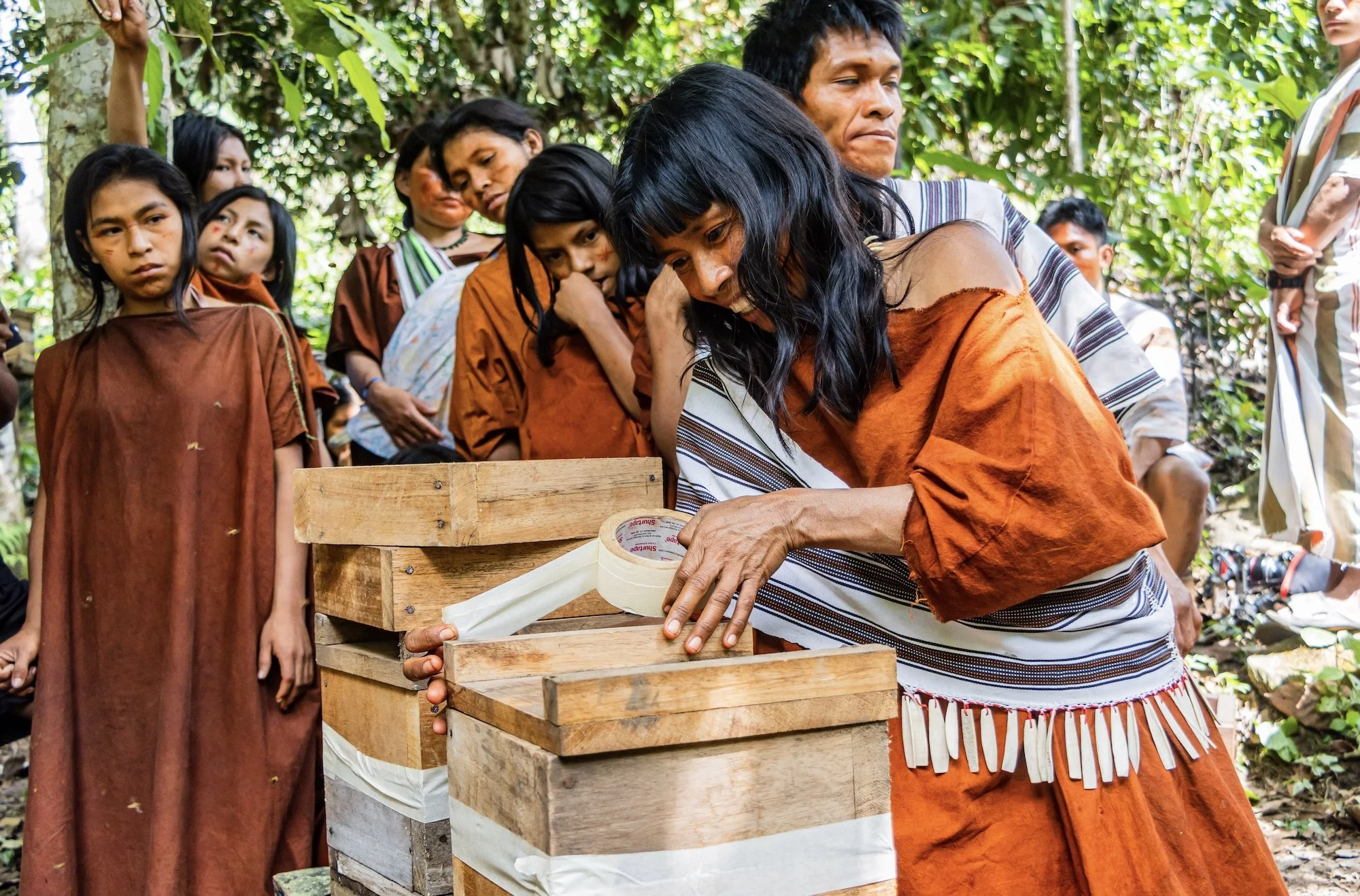
Photo credit: Luis García
Photo credit: Luis García
More photos here (Credits: Luis García)
An Urgent Response to an Environmental and Cultural Crisis
Native stingless bees —including Melipona eburnea, Tetragonisca angustula, Melipona illota, and Melipona grandis— are currently threatened by deforestation, pesticides, habitat loss, and climate change. Their decline directly affects:
the regeneration of Amazonian forests
food security
the continuity of Ashaninka traditional knowledge
sustainable livelihoods based on meliponiculture
These bees play an essential role in the reproduction of hundreds of plant species and are considered a pillar of forest health.
The Rights Recognized for the Bees
The ordinance recognizes inherent rights of the bees and their ecosystems, including:
the right to exist and thrive
the right to maintain healthy populations
the right to a healthy habitat free from pollution
the right to ecologically stable climatic conditions
the right to regenerate their natural cycles
the right to be legally represented in cases of threat or harm
This legal framework will enable immediate action against activities that affect their colonies or habitat, integrating science, Indigenous knowledge, and the Rights of Nature in a single tool.
A Model of Integration Between Science and Indigenous Wisdom
The ordinance is part of a broader effort, in collaboration with Dr. Cesar Delgado (IIAP Peru) and organizations leading this initiative, that includes the following:
the first mapping of wild stingless beehives in the territory
the first documentation of Ashaninka ethnoknowledge about the species
the creation of the first Ashaninka Biocultural Community Protocol
the documentation of sustainable practices for the raising and protection of bees
This process strengthens Indigenous governance, enhances conservation, and ensures the protection of ancestral knowledge.
“This ordinance marks a turning point in how we understand and legislate our relationship with Nature.”—Constanza Prieto, Earth Law Center
“It shows how modern science and ancestral wisdom can come together to create real conservation solutions.”— Rosa Vásquez Espinoza, Amazon Research Internacional
“The Neronto (Melipona eburnea) has much work to do. For us, it is vital for society and for Indigenous Peoples.”— César Ramos Pérez, President of EcoAshaninka
“As part of the Biosphere Reserve, Satipo has the responsibility to conserve what we have. This ordinance drives that mission.”—Ronald Rocha, Environment Manager, Provincial Municipality of Satipo
“Satipo, as part of the Avireri Vraem Biosphere Reserve, is blessed to coexist with abundant and generous nature. Our task as an administration is to care for it, conserve it, and use it wisely.”—Jesús Soto Moya, Deputy Manager of Environmental Services and Biosphere Reserve, Provincial Municipality of Satipo
“Bee:wild is excited to support these heroic efforts in Peru to save the stingless bees—essential pollinators who safeguard biodiversity in the Amazon—the lungs of our planet—and in rainforests around the world.”—Eva Kruse, Executive Director, Bee:wild
A Global Precedent Already Mobilizing the World
With this decision, Satipo positions itself as a global leader in environmental protection and paves the way for future legislation recognizing the rights of other species vital to ecosystems—a level of integration rarely achieved in public policy. The model brings together:
applied science
Rights of Nature
Indigenous governance
community conservation
Moreover, this achievement is already generating global impact: Inspired by this milestone, the global movements Avaaz and Bee:wild have joined forces—mobilizing Avaaz’s 70 million members—to call for the protection of stingless bees across all of Peru. Together with the organizations leading this initiative, they have launched a petition that has already gathered more than 335,000 signatures and aims to reach 500,000, to be delivered by Indigenous leaders to Peru’s authorities in the new year. This rising wave of global support strengthens the model created in Satipo and opens the door for other nations to adopt similar legal frameworks for wild pollinators.
______________________________________________________________________
ABOUT THE ORGANIZATIONS
About Earth Law Center
Earth Law Center is a nonprofit organization based in the United States that promotes the application of the Rights of Nature at the local and international levels, creating alliances with local organizations to recognize and enact laws that acknowledge the inherent rights of rivers, oceans, and terrestrial and coastal ecosystems. In doing so, it seeks to achieve a paradigm shift, advocating for the formal recognition of Nature’s rights to exist, thrive, and evolve. Earth Law Center works to ensure that ecosystems have the same rights as people and corporations, allowing their rights to be defended in national and international courts, not only for the benefit of people but also for the benefit of Nature itself.
About Amazon Research Internacional
Amazon Research Internacional is a nonprofit organization based in Peru, dedicated to the conservation of Amazonian biodiversity, ecosystems, and Indigenous knowledge. By uniting modern science with traditional wisdom, we create innovative conservation solutions that honor biocultural heritage. Our work spans scientific research, education, and community empowerment, focusing on the regeneration of degraded ecosystems, climate change mitigation, and the promotion of nature-positive and culture-positive livelihoods. While stingless bees are a symbolic species representing the health of the Amazon rainforest, our mission also defends traditional medicine, biodiversity, and the Rights of Nature. Together, these efforts strengthen sustainability, fair trade, and the preservation of Indigenous wisdom.
About EcoAshaninka
EcoAshaninka is an Indigenous association representing 25 Native communities from the Ashaninka, Machiguenga, and Kakinte peoples, located in the buffer zone of the Ashaninka Communal Reserve, and five Indigenous organizations: Central Ashaninka of the Ene River – CARE, Ashaninka Federation of the Ene River – FARE, Central Ashaninka of the Tambo River – CART, Ashaninka Organization of the Apurímac River – OARA, Kakinte People Development Organization – ODPK, and the Machiguenga Council of the Urubamba River – COMARU, spanning the Tambo, Ene, and lower Apurímac river basins in the regions of Junín and Cusco. Established on April 21, 2006 and registered under Electronic Entry No. 11009042 of the Huancayo Registry Office, EcoAshaninka serves as Administrator of the Ashaninka Communal Reserve under an agreement with SERNANP signed on September 23, 2008. Its main objective is the co-management of the Reserve with active participation from Indigenous Peoples and beneficiary populations, promoting capacity-building in sustainable forest management and the development of economic activities compatible with conservation, as well as acting as an implementing organization for commitments with public and private institutions supporting the Reserve’s conservation.
About the Ashaninka Communal Reserve
The Ashaninka Communal Reserve, located between the regions of Junín and Pasco in the central Peruvian Amazon, spans approximately 184,468 hectares of tropical forest and was established in 2003 to conserve the area’s extraordinary biodiversity and safeguard the cultural heritage of the Ashaninka people. It forms part of the Vilcabamba–Amboró conservation corridor, one of the most species-rich regions on the planet. The Reserve is co-managed by the National Service of Natural Protected Areas (SERNANP) and local Ashaninka organizations under a shared management model that seeks to balance environmental protection with sustainable use of natural resources, ensuring the well-being of the communities that have traditionally inhabited and cared for this territory.
About Bee:wild
Bee:wild is a global initiative led by Re:wild and international partners that seeks to protect native pollinators through science, education, and community action. The campaign promotes nature-based solutions, supports local leadership, and highlights the importance of wild bees for ecosystem health and food security. Its mission is to inspire individuals, organizations, and governments to defend bees and the landscapes that sustain life on the planet.
SATIPO APRUEBA ORDENANZA HISTÓRICA: POR PRIMERA VEZ EN EL MUNDO, UN INSECTO OBTIENE DERECHOS LEGALES
En un precedente sin equivalentes a nivel mundial, la Municipalidad Provincial de Satipo aprobó la Ordenanza Municipal N° 33-2025-CM/MPS, que otorga derechos legales a las abejas nativas sin aguijón dentro de la Reserva de Biosfera Avireri VRAEM. Estos insectos —la especie de abeja más antigua del planeta y responsables de polinizar más del 80% de la flora amazónica, incluidas cosechas apreciadas a nivel mundial como el café, el chocolate, los aguacates y los arándanos— son ahora reconocidos formalmente como seres con derechos inherentes. Se trata del primer reconocimiento formal de derechos a un insecto en la historia, un avance revolucionario en la protección de la biodiversidad y del patrimonio biocultural del Perú.
CONTACTOS PARA PRENSA
Constanza Prieto Figelist, Directora Programa Legal para America Latina, Earth Law Center, cpfigelist@earthlaw.org (Español/ Inglés)
Rosa Vásquez Espinoza, Directora Ejecutiva, Amazon Research Internacional, contact@rosavespinoza.com (Español/ Inglés)
En un precedente sin equivalentes a nivel mundial, la Municipalidad Provincial de Satipo aprobó la Ordenanza Municipal N° 33-2025-CM/MPS, que otorga derechos legales a las abejas nativas sin aguijón dentro de la Reserva de Biosfera Avireri VRAEM. Estos insectos —la especie de abeja más antigua del planeta y responsables de polinizar más del 80% de la flora amazónica, incluidas cosechas apreciadas a nivel mundial como el café, el chocolate, los aguacates y los arándanos— son ahora reconocidos formalmente como seres con derechos inherentes. Se trata del primer reconocimiento formal de derechos a un insecto en la historia, un avance revolucionario en la protección de la biodiversidad y del patrimonio biocultural del Perú.
La ordenanza fue respaldada por un informe técnico conjunto de Amazon Research Internacional y Earth Law Center, y aprobada en estrecha colaboración con la Reserva Comunal Ashaninka y EcoAshaninka. Esta legislación es el resultado de una alianza única entre líderes Indígenas, científicos y defensores ambientales—una colaboración sin precedentes que, según quienes la impulsan, podría inspirar iniciativas similares en todo el mundo y avanzar en el reconocimiento del valor intrínseco de las abejas silvestres y los ecosistemas que sostienen.
Crédito: Luis García
Crédito: Luis García
Fotos Aquí (Créditos: Luis García)
UNA RESPUESTA URGENTE A UNA CRISIS AMBIENTAL Y CULTURAL
Las abejas nativas sin aguijón —entre ellas Melipona eburnea, Tetragonisca angustula, Melipona illota y Melipona grandis— están hoy amenazadas por la deforestación, pesticidas, pérdida de hábitat y cambio climático.
Su declive impacta directamente:
la regeneración de los bosques amazónicos
la seguridad alimentaria
la continuidad del conocimiento tradicional Ashaninka
los medios de vida sostenibles basados en la meliponicultura
Estas abejas cumplen un rol esencial en la reproducción de cientos de especies vegetales y son consideradas un pilar de la salud del bosque.
LOS DERECHOS RECONOCIDOS A LAS ABEJAS
La ordenanza reconoce derechos inherentes de las abejas y sus ecosistemas, entre ellos:
Derecho a existir y prosperar
Derecho a mantener poblaciones saludables
Derecho a un hábitat sano y libre de contaminación
Derecho a condiciones climáticas ecológicamente estables
Derecho a regenerar sus ciclos naturales
Derecho a ser representadas legalmente en casos de amenaza o daño
Este marco legal permitirá acción inmediata ante actividades que afecten sus colonias o su hábitat, incorporando la ciencia, los saberes Indígenas y los Derechos de la Naturaleza en una sola herramienta.
UN MODELO DE INTEGRACIÓN ENTRE CIENCIA Y SABIDURÍA INDÍGENA
La ordenanza forma parte de un esfuerzo amplio que incluye lo sgt, en colaboración con el Dr Cesar Delgado (IIAP – Peru) y las organizaciones autoras de esta iniciativa:
el primer mapeo de colonias de abejas nativas en el territorio
la primera documentación del etnoconocimiento Ashaninka sobre estas especies
la creación del primer Protocolo Comunitario Biocultural Ashaninka
el registro de prácticas tradicionales de manejo y protección de abejas
Este proceso eleva la gobernanza Indígena, fortalece la conservación y asegura la protección del conocimiento ancestral.
“Esta ordenanza marca un punto de inflexión en la forma en que entendemos y legislamos nuestra relación con la Naturaleza”.
— Constanza Prieto, Earth Law Center
“Demuestra cómo la ciencia moderna y la sabiduría ancestral pueden unirse para crear soluciones reales de conservación”.
— Rosa Vásquez Espinoza, Amazon Research Internacional
“El Neronto (Melipona eburnea) tiene mucho que hacer. Para nosotros, es vital para la sociedad y para los pueblos originarios”.
— César Ramos Pérez, Presidente de EcoAshaninka
“Como parte de la Reserva de Biosfera, Satipo tiene la responsabilidad de conservar lo que tenemos. Esta ordenanza impulsa esa misión”.
— Ronald Rocha, Gerente de Ambiente de Satipo, Municipalidad Provincial de Satipo
“Satipo, como parte de la Reserva de Biosfera Avireri Vraem, tiene la bendición de convivir con una naturaleza abundante y generosa. Nuestra tarea como gestión es cuidarla, conservarla y aprovecharla con sabiduría” - Jesús Soto Moya, Subgerente de Servicios Ambientales y Reserva de Biosfera. Municipalidad Provincial de Satipo
“Bee:wild se enorgullece de apoyar estos esfuerzos heroicos en el Perú para salvar a las abejas sin aguijón, polinizadores esenciales que salvaguardan la biodiversidad en la Amazonía —los pulmones de nuestro planeta— y en las selvas tropicales de todo el mundo”. – Eva Kruse, Directora Ejecutiva, Bee:wild
UN PRECEDENTE GLOBAL QUE YA ESTÁ MOBILIZANDO AL MUNDO
Con esta decisión, Satipo se posiciona como líder mundial en protección ambiental y marca un camino para futuras legislaciones que reconozcan los derechos de otras especies clave para los ecosistemas. Una integración pocas veces alcanzada en políticas públicas. El modelo combina:
ciencia aplicada
derechos de la naturaleza
gobernanza indígena
conservación comunitaria
Además, este logro ya está generando un impacto global: inspirados por este hito, los movimientos internacionales Avaaz y Bee:wild han unido fuerzas —movilizando a los 70 millones de miembros de Avaaz— para pedir la protección de las abejas sin aguijón en todo el Perú. Junto con las organizaciones que lideran esta iniciativa, han lanzado una petición que ya ha reunido más de 335,000 firmas y aspira a alcanzar las 500,000, para ser entregada por líderes Indígenas a las autoridades peruanas en el nuevo año. Esta creciente ola de apoyo mundial fortalece el modelo creado en Satipo y abre la puerta para que otros países adopten marcos legales similares para la protección de polinizadores silvestres.
______________________________________________________________________
SOBRE LAS ORGANIZACIONES
Sobre Earth Law Center
Earth Law Center es una organización sin fines de lucro, con sede en Estados Unidos, que promueve la aplicación de los Derechos de la Naturaleza a nivel local e internacional, creando alianzas con organizaciones locales para el reconocimiento y la promulgación de leyes que reconozcan los derechos inherentes de los ríos, los océanos y los ecosistemas terrestres y costeros. De esta manera, pretende lograr un cambio de paradigma, luchando por el reconocimiento formal de los Derechos de la Naturaleza a existir, desarrollarse y evolucionar. Earth Law Center busca garantizar a los ecosistemas los mismos derechos que tienen las personas y las empresas, permitiendo la defensa de sus derechos ante los tribunales nacionales e internacionales, no solo en beneficio de las personas, sino también en beneficio de la propia Naturaleza.
Sobre Amazon Research Internacional
Amazon Research Internacional es una organización sin fines de lucro con sede en Perú, dedicada a la conservación de la biodiversidad, los ecosistemas y los conocimientos Indígenas de la Amazonía. Al unir la ciencia moderna con la sabiduría tradicional, creamos soluciones de conservación innovadoras que honran el patrimonio biocultural. Nuestro trabajo abarca la investigación científica, la educación y el empoderamiento de las comunidades, centrándonos en la regeneración de los ecosistemas degradados, la mitigación del cambio climático y el fomento de medios de vida positivos para la naturaleza y la cultura. Si bien las abejas sin aguijón son una especie simbólica que representa la salud de la selva amazónica, su misión también defiende la medicina tradicional, la biodiversidad y los derechos de la Naturaleza. En conjunto, estos esfuerzos fortalecen la sostenibilidad, el comercio justo y la preservación de la sabiduría Indígena.
Sobre EcoAsháninka
Es una asociación Indígena que representa a 25 comunidades nativas, de las etnias Asháninka, Machiguenga y Kakinte, asentadas en la zona de amortiguamiento de la Reserva Comunal Asháninka y a cinco organizaciones Indígenas: Central Asháninka del Río Ene - CARE, Federación Asháninka Rio Ene – FARE, Central Asháninka del Río Tambo - CART, Organización Asháninka del Río Apurímac – OARA, Organización para el Desarrollo del Pueblo Kakinte – ODPK y Consejo Machiguenga del Río Urubamba - COMARU de la cuenca del Tambo, Ene y baja del Apurímac pertenecientes a los departamentos de Junín y Cuzco, constituida el 21 de abril de 2006, inscrita en el Registro de Personas Jurídicas en la partida Electrónica N° 11009042 de la Zona Registral N° VIII Sede Huancayo – Oficina Registral de Satipo, es Ejecutor del Contrato de Administración de la Reserva comunal Asháninka, firmado con el Servicio Nacional de Áreas Naturales Protegidas por el Estado-SERNANP el 23 de setiembre de 2008. Tiene como principal objetivo la Co-administración de la Reserva Comunal Asháninka, con la participación efectiva de los pueblos Indígenas y la población beneficiaria, promoviendo el fortalecimiento de las capacidades locales en manejo y aprovechamiento sostenible de los recursos naturales del bosque y el desarrollo de actividades económicas compatibles con la conservación; así también actuar como organización ejecutora a compromisos asumidos con instituciones públicas y privadas, nacionales e internacionales, que apoyan la gestión para la conservación de la Reserva Comunal Asháninka.
Sobre la Reserva Comunal Asháninka
La Reserva Comunal Asháninka, ubicada entre las regiones de Junín y Pasco en la Amazonía central del Perú, abarca aproximadamente 184,468 hectáreas de bosques tropicales y fue establecida en 2003 con el objetivo de conservar la extraordinaria biodiversidad de la zona y salvaguardar la herencia cultural del pueblo Asháninka. Forma parte del corredor de conservación Vilcabamba–Amboró, uno de los más ricos en especies del planeta. La reserva es coadministrada por el Servicio Nacional de Áreas Naturales Protegidas por el Estado (SERNANP) y las organizaciones Asháninka locales, bajo un modelo de gestión compartida que busca equilibrar la protección ambiental con el uso sostenible de los recursos naturales, garantizando el bienestar de las comunidades que tradicionalmente han habitado y cuidado este territorio.
Sobre Bee:wild
Bee:wild es una iniciativa global impulsada por Re:wild y aliados internacionales que busca proteger a los polinizadores nativos a través de ciencia, educación y acción comunitaria. La campaña promueve soluciones basadas en la naturaleza, apoya el liderazgo local y visibiliza la importancia de las abejas silvestres para la salud de los ecosistemas y la seguridad alimentaria. Su misión es inspirar a personas, organizaciones y gobiernos a defender a las abejas y los paisajes que sostienen la vida en el planeta.

The Global Alliance is a world-wide movement of individuals and organizations creating human communities that respect and defend the rights of Nature.
Join us and get back to what really matters.

Reclaiming Prosperity Through Nature's Rights

Why Rights of Nature?
-
March 2026
- Mar 10, 2026 Earth Law Center Opens London Office, Expands International Work on Legal Innovations for the Planet Mar 10, 2026
-
November 2025
- Nov 24, 2025 Satipo Approves Historic Ordinance: In World First, An Insect Is Granted Legal Rights Nov 24, 2025
- Nov 24, 2025 SATIPO APRUEBA ORDENANZA HISTÓRICA: POR PRIMERA VEZ EN EL MUNDO, UN INSECTO OBTIENE DERECHOS LEGALES Nov 24, 2025
- October 2025
-
September 2025
- Sep 23, 2025 13 Finalists Announced for the 2025 World Future Policy Award—Including ELC-Supported National Legislation on Rights of Nature in Panama Sep 23, 2025
- Sep 17, 2025 Five Rights of Nature and Ecocentric Law-related Motions to be Voted Upon at Upcoming IUCN World Conservation Congress Sep 17, 2025
- Sep 11, 2025 “The Animals’ Lawsuit Against Humanity” to show at Climate Week NYC on Sept. 24th, Exploring Interfaith Environmentalism and the Animal Rights Movement Sep 11, 2025
-
May 2025
- May 8, 2025 Judge Temporarily Halts Logging of 300 Acres of Legacy Forests in the Elwha Watershed May 8, 2025
- May 7, 2025 Victory for Conservation: Washington State Budget Secures Critical Funding to Protect Elwha Watershed May 7, 2025
- April 2025
-
March 2025
- Mar 18, 2025 World Water Day Highlights Sacred Relationship with World-Renowned Elwha River Mar 18, 2025
-
October 2024
- Oct 31, 2024 Victoria en segunda instancia: Sala Civil de Loreto ratifica sentencia que declara al río Marañón y sus afluentes como sujeto de derecho Oct 31, 2024
- Oct 31, 2024 Landmark Victory: Civil Court of Loreto Upholds Ruling Recognizing Rights of the Marañón River and Its Tributaries in Appellate Decision Oct 31, 2024
- Oct 2, 2024 New Report Champions Legal and Financial Support for Earth-Centered Laws and Governance Ahead of Biodiversity Negotiations in Cali, Colombia Oct 2, 2024
- August 2024
-
June 2024
- Jun 19, 2024 PR: Earth Law Portal Launch Jun 19, 2024
-
February 2024
- Feb 29, 2024 New Report from Earth Law Center Advocates for Ocean Justice in Global Plastics Treaty Feb 29, 2024
- November 2023
- May 2023
-
March 2023
- Mar 15, 2023 The Rights of Nature movement continues to grow in the Pacific Northwest Mar 15, 2023
- Mar 15, 2023 PANAMA PASSES NATIONAL SEA TURTLE LAW RECOGNIZING THEIR RIGHTS Mar 15, 2023
-
December 2022
- Dec 22, 2022 COP15: Landmark Biodiversity Deal Recognizes Rights of Nature is Vital to its Success Dec 22, 2022
-
June 2022
- Jun 28, 2022 Biodiversity Treaty Increases Support for Rights of Mother Earth Jun 28, 2022
- Jun 11, 2022 Biodiversity Treaty Shows Renewed Support for the Rights of Nature Jun 11, 2022
- December 2021
-
October 2021
- Oct 12, 2021 Mujeres Kukama dicen que su río Marañón es un ser vivo: Demanda pionera presentada en Perú Oct 12, 2021
- Oct 12, 2021 Kukama Women Say Their Marañón River is a Living Being: Groundbreaking Lawsuit Filed in Peru Oct 12, 2021
-
September 2021
- Sep 20, 2021 Advocates at IUCN Congress Highlight a Wave of New Support for the Rights of Rivers Sep 20, 2021
- Sep 10, 2021 Rights of Nature a focus at the IUCN Congress Sep 10, 2021
-
February 2021
- Feb 12, 2021 EARTH LAW CENTER TO PARTNER ON “INVISIBLE HAND” YOUTH INTERNATIONAL SCREENING Feb 12, 2021
- Feb 8, 2021 EARTH LAW CENTER APPOINTS TWO NEW BOARD DIRECTORS Feb 8, 2021
-
September 2020
- Sep 25, 2020 Ceremony and Solidarity on 50th anniversary of orca's captivity Sep 25, 2020
- Sep 11, 2020 Coalition Submits Amicus Brief Urging Ecuador’s Constitutional Court to Make Landmark Rights of Nature Ruling in Los Cedros Case Sep 11, 2020
- Sep 2, 2020 Convention on Biodiversity Advances the Rights of Nature in Proposed Post-2020 Global Biodiversity Framework Sep 2, 2020
-
June 2020
- Jun 10, 2020 Earth Law Center joins the fight to free orca from 50 year captivity and bring her home. Jun 10, 2020
-
September 2019
- Sep 15, 2019 River Defenders Win Major Victory for California Waterways Sep 15, 2019
-
June 2019
- Jun 27, 2019 Pronunciamiento en El Salvador considera que los bosques son entidades vivientes Jun 27, 2019
- Jun 6, 2019 Pronouncement in El Salvador Deems Forests to be Living Entities Jun 6, 2019
-
May 2019
- May 23, 2019 Publisher Confirmed for First Earth Law Legal Textbook May 23, 2019
-
April 2019
- Apr 3, 2019 Environmental Leaders in El Salvador Announce Campaign to Give Legal Rights to Natural Forests Apr 3, 2019
- Apr 3, 2019 Earth Law Center Launches Community Toolkit for Rights of Nature Apr 3, 2019