

Satipo Approves Historic Ordinance: In World First, An Insect Is Granted Legal Rights
In an unprecedented legal development, the Provincial Municipality of Satipo, Peru has approved Municipal Ordinance No. 33-2025-CM/MPS, which grants legal rights to native stingless bees within the Avireri VRAEM Biosphere Reserve. These insects—the oldest bee species on the planet, and which are responsible for pollinating over 80% of Amazonian flora, including globally cherished crops like coffee, chocolate, avocados, and blueberries—are now formally recognized as beings with inherent rights. This is the first formal recognition of rights for an insect in history, a revolutionary step in protecting Peru’s biodiversity and biocultural heritage.

PRESS CONTACTS
Constanza Prieto Figelist, Director of the Legal Program for Latin America, Earth Law Center, cpfigelist@earthlaw.org (English/Spanish)
Rosa Vásquez Espinoza, Executive Director, Amazon Research Internacional, contact@rosavespinoza.com (English/Spanish)
In a precedent with no equivalent worldwide, the Provincial Municipality of Satipo has approved Municipal Ordinance No. 33-2025-CM/MPS, which grants legal rights to native stingless bees within the Avireri VRAEM Biosphere Reserve. These insects—the oldest bee species on the planet, and which are responsible for pollinating over 80% of Amazonian flora, including globally cherished crops like coffee, chocolate, avocados, and blueberries—are now formally recognized as beings with inherent rights. This is the first formal recognition of rights for an insect in history, a revolutionary step in protecting Peru’s biodiversity and biocultural heritage.
The ordinance was supported by a joint technical report from Amazon Research Internacional and Earth Law Center, and approved in close collaboration with the Ashaninka Communal Reserve and EcoAshaninka. This legislation is the result of a unique alliance between Indigenous leaders, scientists, and environmental advocates—a unique partnership that, campaigners say, could inspire similar efforts worldwide and advance the recognition of the intrinsic value of wild bees and the ecosystems they sustain.

Photo credit: Luis García
Photo credit: Luis García
More photos here (Credits: Luis García)
An Urgent Response to an Environmental and Cultural Crisis
Native stingless bees —including Melipona eburnea, Tetragonisca angustula, Melipona illota, and Melipona grandis— are currently threatened by deforestation, pesticides, habitat loss, and climate change. Their decline directly affects:
the regeneration of Amazonian forests
food security
the continuity of Ashaninka traditional knowledge
sustainable livelihoods based on meliponiculture
These bees play an essential role in the reproduction of hundreds of plant species and are considered a pillar of forest health.
The Rights Recognized for the Bees
The ordinance recognizes inherent rights of the bees and their ecosystems, including:
the right to exist and thrive
the right to maintain healthy populations
the right to a healthy habitat free from pollution
the right to ecologically stable climatic conditions
the right to regenerate their natural cycles
the right to be legally represented in cases of threat or harm
This legal framework will enable immediate action against activities that affect their colonies or habitat, integrating science, Indigenous knowledge, and the Rights of Nature in a single tool.
A Model of Integration Between Science and Indigenous Wisdom
The ordinance is part of a broader effort, in collaboration with Dr. Cesar Delgado (IIAP Peru) and organizations leading this initiative, that includes the following:
the first mapping of wild stingless beehives in the territory
the first documentation of Ashaninka ethnoknowledge about the species
the creation of the first Ashaninka Biocultural Community Protocol
the documentation of sustainable practices for the raising and protection of bees
This process strengthens Indigenous governance, enhances conservation, and ensures the protection of ancestral knowledge.
“This ordinance marks a turning point in how we understand and legislate our relationship with Nature.”—Constanza Prieto, Earth Law Center
“It shows how modern science and ancestral wisdom can come together to create real conservation solutions.”— Rosa Vásquez Espinoza, Amazon Research Internacional
“The Neronto (Melipona eburnea) has much work to do. For us, it is vital for society and for Indigenous Peoples.”— César Ramos Pérez, President of EcoAshaninka
“As part of the Biosphere Reserve, Satipo has the responsibility to conserve what we have. This ordinance drives that mission.”—Ronald Rocha, Environment Manager, Provincial Municipality of Satipo
“Satipo, as part of the Avireri Vraem Biosphere Reserve, is blessed to coexist with abundant and generous nature. Our task as an administration is to care for it, conserve it, and use it wisely.”—Jesús Soto Moya, Deputy Manager of Environmental Services and Biosphere Reserve, Provincial Municipality of Satipo
“Bee:wild is excited to support these heroic efforts in Peru to save the stingless bees—essential pollinators who safeguard biodiversity in the Amazon—the lungs of our planet—and in rainforests around the world.”—Eva Kruse, Executive Director, Bee:wild
A Global Precedent Already Mobilizing the World
With this decision, Satipo positions itself as a global leader in environmental protection and paves the way for future legislation recognizing the rights of other species vital to ecosystems—a level of integration rarely achieved in public policy. The model brings together:
applied science
Rights of Nature
Indigenous governance
community conservation
Moreover, this achievement is already generating global impact: Inspired by this milestone, the global movements Avaaz and Bee:wild have joined forces—mobilizing Avaaz’s 70 million members—to call for the protection of stingless bees across all of Peru. Together with the organizations leading this initiative, they have launched a petition that has already gathered more than 335,000 signatures and aims to reach 500,000, to be delivered by Indigenous leaders to Peru’s authorities in the new year. This rising wave of global support strengthens the model created in Satipo and opens the door for other nations to adopt similar legal frameworks for wild pollinators.
______________________________________________________________________
ABOUT THE ORGANIZATIONS
About Earth Law Center
Earth Law Center is a nonprofit organization based in the United States that promotes the application of the Rights of Nature at the local and international levels, creating alliances with local organizations to recognize and enact laws that acknowledge the inherent rights of rivers, oceans, and terrestrial and coastal ecosystems. In doing so, it seeks to achieve a paradigm shift, advocating for the formal recognition of Nature’s rights to exist, thrive, and evolve. Earth Law Center works to ensure that ecosystems have the same rights as people and corporations, allowing their rights to be defended in national and international courts, not only for the benefit of people but also for the benefit of Nature itself.
About Amazon Research Internacional
Amazon Research Internacional is a nonprofit organization based in Peru, dedicated to the conservation of Amazonian biodiversity, ecosystems, and Indigenous knowledge. By uniting modern science with traditional wisdom, we create innovative conservation solutions that honor biocultural heritage. Our work spans scientific research, education, and community empowerment, focusing on the regeneration of degraded ecosystems, climate change mitigation, and the promotion of nature-positive and culture-positive livelihoods. While stingless bees are a symbolic species representing the health of the Amazon rainforest, our mission also defends traditional medicine, biodiversity, and the Rights of Nature. Together, these efforts strengthen sustainability, fair trade, and the preservation of Indigenous wisdom.
About EcoAshaninka
EcoAshaninka is an Indigenous association representing 25 Native communities from the Ashaninka, Machiguenga, and Kakinte peoples, located in the buffer zone of the Ashaninka Communal Reserve, and five Indigenous organizations: Central Ashaninka of the Ene River – CARE, Ashaninka Federation of the Ene River – FARE, Central Ashaninka of the Tambo River – CART, Ashaninka Organization of the Apurímac River – OARA, Kakinte People Development Organization – ODPK, and the Machiguenga Council of the Urubamba River – COMARU, spanning the Tambo, Ene, and lower Apurímac river basins in the regions of Junín and Cusco. Established on April 21, 2006 and registered under Electronic Entry No. 11009042 of the Huancayo Registry Office, EcoAshaninka serves as Administrator of the Ashaninka Communal Reserve under an agreement with SERNANP signed on September 23, 2008. Its main objective is the co-management of the Reserve with active participation from Indigenous Peoples and beneficiary populations, promoting capacity-building in sustainable forest management and the development of economic activities compatible with conservation, as well as acting as an implementing organization for commitments with public and private institutions supporting the Reserve’s conservation.
About the Ashaninka Communal Reserve
The Ashaninka Communal Reserve, located between the regions of Junín and Pasco in the central Peruvian Amazon, spans approximately 184,468 hectares of tropical forest and was established in 2003 to conserve the area’s extraordinary biodiversity and safeguard the cultural heritage of the Ashaninka people. It forms part of the Vilcabamba–Amboró conservation corridor, one of the most species-rich regions on the planet. The Reserve is co-managed by the National Service of Natural Protected Areas (SERNANP) and local Ashaninka organizations under a shared management model that seeks to balance environmental protection with sustainable use of natural resources, ensuring the well-being of the communities that have traditionally inhabited and cared for this territory.
About Bee:wild
Bee:wild is a global initiative led by Re:wild and international partners that seeks to protect native pollinators through science, education, and community action. The campaign promotes nature-based solutions, supports local leadership, and highlights the importance of wild bees for ecosystem health and food security. Its mission is to inspire individuals, organizations, and governments to defend bees and the landscapes that sustain life on the planet.
SATIPO APRUEBA ORDENANZA HISTÓRICA: POR PRIMERA VEZ EN EL MUNDO, UN INSECTO OBTIENE DERECHOS LEGALES
En un precedente sin equivalentes a nivel mundial, la Municipalidad Provincial de Satipo aprobó la Ordenanza Municipal N° 33-2025-CM/MPS, que otorga derechos legales a las abejas nativas sin aguijón dentro de la Reserva de Biosfera Avireri VRAEM. Estos insectos —la especie de abeja más antigua del planeta y responsables de polinizar más del 80% de la flora amazónica, incluidas cosechas apreciadas a nivel mundial como el café, el chocolate, los aguacates y los arándanos— son ahora reconocidos formalmente como seres con derechos inherentes. Se trata del primer reconocimiento formal de derechos a un insecto en la historia, un avance revolucionario en la protección de la biodiversidad y del patrimonio biocultural del Perú.
CONTACTOS PARA PRENSA
Constanza Prieto Figelist, Directora Programa Legal para America Latina, Earth Law Center, cpfigelist@earthlaw.org (Español/ Inglés)
Rosa Vásquez Espinoza, Directora Ejecutiva, Amazon Research Internacional, contact@rosavespinoza.com (Español/ Inglés)
En un precedente sin equivalentes a nivel mundial, la Municipalidad Provincial de Satipo aprobó la Ordenanza Municipal N° 33-2025-CM/MPS, que otorga derechos legales a las abejas nativas sin aguijón dentro de la Reserva de Biosfera Avireri VRAEM. Estos insectos —la especie de abeja más antigua del planeta y responsables de polinizar más del 80% de la flora amazónica, incluidas cosechas apreciadas a nivel mundial como el café, el chocolate, los aguacates y los arándanos— son ahora reconocidos formalmente como seres con derechos inherentes. Se trata del primer reconocimiento formal de derechos a un insecto en la historia, un avance revolucionario en la protección de la biodiversidad y del patrimonio biocultural del Perú.
La ordenanza fue respaldada por un informe técnico conjunto de Amazon Research Internacional y Earth Law Center, y aprobada en estrecha colaboración con la Reserva Comunal Ashaninka y EcoAshaninka. Esta legislación es el resultado de una alianza única entre líderes Indígenas, científicos y defensores ambientales—una colaboración sin precedentes que, según quienes la impulsan, podría inspirar iniciativas similares en todo el mundo y avanzar en el reconocimiento del valor intrínseco de las abejas silvestres y los ecosistemas que sostienen.
Crédito: Luis García
Crédito: Luis García
Fotos Aquí (Créditos: Luis García)
UNA RESPUESTA URGENTE A UNA CRISIS AMBIENTAL Y CULTURAL
Las abejas nativas sin aguijón —entre ellas Melipona eburnea, Tetragonisca angustula, Melipona illota y Melipona grandis— están hoy amenazadas por la deforestación, pesticidas, pérdida de hábitat y cambio climático.
Su declive impacta directamente:
la regeneración de los bosques amazónicos
la seguridad alimentaria
la continuidad del conocimiento tradicional Ashaninka
los medios de vida sostenibles basados en la meliponicultura
Estas abejas cumplen un rol esencial en la reproducción de cientos de especies vegetales y son consideradas un pilar de la salud del bosque.
LOS DERECHOS RECONOCIDOS A LAS ABEJAS
La ordenanza reconoce derechos inherentes de las abejas y sus ecosistemas, entre ellos:
Derecho a existir y prosperar
Derecho a mantener poblaciones saludables
Derecho a un hábitat sano y libre de contaminación
Derecho a condiciones climáticas ecológicamente estables
Derecho a regenerar sus ciclos naturales
Derecho a ser representadas legalmente en casos de amenaza o daño
Este marco legal permitirá acción inmediata ante actividades que afecten sus colonias o su hábitat, incorporando la ciencia, los saberes Indígenas y los Derechos de la Naturaleza en una sola herramienta.
UN MODELO DE INTEGRACIÓN ENTRE CIENCIA Y SABIDURÍA INDÍGENA
La ordenanza forma parte de un esfuerzo amplio que incluye lo sgt, en colaboración con el Dr Cesar Delgado (IIAP – Peru) y las organizaciones autoras de esta iniciativa:
el primer mapeo de colonias de abejas nativas en el territorio
la primera documentación del etnoconocimiento Ashaninka sobre estas especies
la creación del primer Protocolo Comunitario Biocultural Ashaninka
el registro de prácticas tradicionales de manejo y protección de abejas
Este proceso eleva la gobernanza Indígena, fortalece la conservación y asegura la protección del conocimiento ancestral.
“Esta ordenanza marca un punto de inflexión en la forma en que entendemos y legislamos nuestra relación con la Naturaleza”.
— Constanza Prieto, Earth Law Center
“Demuestra cómo la ciencia moderna y la sabiduría ancestral pueden unirse para crear soluciones reales de conservación”.
— Rosa Vásquez Espinoza, Amazon Research Internacional
“El Neronto (Melipona eburnea) tiene mucho que hacer. Para nosotros, es vital para la sociedad y para los pueblos originarios”.
— César Ramos Pérez, Presidente de EcoAshaninka
“Como parte de la Reserva de Biosfera, Satipo tiene la responsabilidad de conservar lo que tenemos. Esta ordenanza impulsa esa misión”.
— Ronald Rocha, Gerente de Ambiente de Satipo, Municipalidad Provincial de Satipo
“Satipo, como parte de la Reserva de Biosfera Avireri Vraem, tiene la bendición de convivir con una naturaleza abundante y generosa. Nuestra tarea como gestión es cuidarla, conservarla y aprovecharla con sabiduría” - Jesús Soto Moya, Subgerente de Servicios Ambientales y Reserva de Biosfera. Municipalidad Provincial de Satipo
“Bee:wild se enorgullece de apoyar estos esfuerzos heroicos en el Perú para salvar a las abejas sin aguijón, polinizadores esenciales que salvaguardan la biodiversidad en la Amazonía —los pulmones de nuestro planeta— y en las selvas tropicales de todo el mundo”. – Eva Kruse, Directora Ejecutiva, Bee:wild
UN PRECEDENTE GLOBAL QUE YA ESTÁ MOBILIZANDO AL MUNDO
Con esta decisión, Satipo se posiciona como líder mundial en protección ambiental y marca un camino para futuras legislaciones que reconozcan los derechos de otras especies clave para los ecosistemas. Una integración pocas veces alcanzada en políticas públicas. El modelo combina:
ciencia aplicada
derechos de la naturaleza
gobernanza indígena
conservación comunitaria
Además, este logro ya está generando un impacto global: inspirados por este hito, los movimientos internacionales Avaaz y Bee:wild han unido fuerzas —movilizando a los 70 millones de miembros de Avaaz— para pedir la protección de las abejas sin aguijón en todo el Perú. Junto con las organizaciones que lideran esta iniciativa, han lanzado una petición que ya ha reunido más de 335,000 firmas y aspira a alcanzar las 500,000, para ser entregada por líderes Indígenas a las autoridades peruanas en el nuevo año. Esta creciente ola de apoyo mundial fortalece el modelo creado en Satipo y abre la puerta para que otros países adopten marcos legales similares para la protección de polinizadores silvestres.
______________________________________________________________________
SOBRE LAS ORGANIZACIONES
Sobre Earth Law Center
Earth Law Center es una organización sin fines de lucro, con sede en Estados Unidos, que promueve la aplicación de los Derechos de la Naturaleza a nivel local e internacional, creando alianzas con organizaciones locales para el reconocimiento y la promulgación de leyes que reconozcan los derechos inherentes de los ríos, los océanos y los ecosistemas terrestres y costeros. De esta manera, pretende lograr un cambio de paradigma, luchando por el reconocimiento formal de los Derechos de la Naturaleza a existir, desarrollarse y evolucionar. Earth Law Center busca garantizar a los ecosistemas los mismos derechos que tienen las personas y las empresas, permitiendo la defensa de sus derechos ante los tribunales nacionales e internacionales, no solo en beneficio de las personas, sino también en beneficio de la propia Naturaleza.
Sobre Amazon Research Internacional
Amazon Research Internacional es una organización sin fines de lucro con sede en Perú, dedicada a la conservación de la biodiversidad, los ecosistemas y los conocimientos Indígenas de la Amazonía. Al unir la ciencia moderna con la sabiduría tradicional, creamos soluciones de conservación innovadoras que honran el patrimonio biocultural. Nuestro trabajo abarca la investigación científica, la educación y el empoderamiento de las comunidades, centrándonos en la regeneración de los ecosistemas degradados, la mitigación del cambio climático y el fomento de medios de vida positivos para la naturaleza y la cultura. Si bien las abejas sin aguijón son una especie simbólica que representa la salud de la selva amazónica, su misión también defiende la medicina tradicional, la biodiversidad y los derechos de la Naturaleza. En conjunto, estos esfuerzos fortalecen la sostenibilidad, el comercio justo y la preservación de la sabiduría Indígena.
Sobre EcoAsháninka
Es una asociación Indígena que representa a 25 comunidades nativas, de las etnias Asháninka, Machiguenga y Kakinte, asentadas en la zona de amortiguamiento de la Reserva Comunal Asháninka y a cinco organizaciones Indígenas: Central Asháninka del Río Ene - CARE, Federación Asháninka Rio Ene – FARE, Central Asháninka del Río Tambo - CART, Organización Asháninka del Río Apurímac – OARA, Organización para el Desarrollo del Pueblo Kakinte – ODPK y Consejo Machiguenga del Río Urubamba - COMARU de la cuenca del Tambo, Ene y baja del Apurímac pertenecientes a los departamentos de Junín y Cuzco, constituida el 21 de abril de 2006, inscrita en el Registro de Personas Jurídicas en la partida Electrónica N° 11009042 de la Zona Registral N° VIII Sede Huancayo – Oficina Registral de Satipo, es Ejecutor del Contrato de Administración de la Reserva comunal Asháninka, firmado con el Servicio Nacional de Áreas Naturales Protegidas por el Estado-SERNANP el 23 de setiembre de 2008. Tiene como principal objetivo la Co-administración de la Reserva Comunal Asháninka, con la participación efectiva de los pueblos Indígenas y la población beneficiaria, promoviendo el fortalecimiento de las capacidades locales en manejo y aprovechamiento sostenible de los recursos naturales del bosque y el desarrollo de actividades económicas compatibles con la conservación; así también actuar como organización ejecutora a compromisos asumidos con instituciones públicas y privadas, nacionales e internacionales, que apoyan la gestión para la conservación de la Reserva Comunal Asháninka.
Sobre la Reserva Comunal Asháninka
La Reserva Comunal Asháninka, ubicada entre las regiones de Junín y Pasco en la Amazonía central del Perú, abarca aproximadamente 184,468 hectáreas de bosques tropicales y fue establecida en 2003 con el objetivo de conservar la extraordinaria biodiversidad de la zona y salvaguardar la herencia cultural del pueblo Asháninka. Forma parte del corredor de conservación Vilcabamba–Amboró, uno de los más ricos en especies del planeta. La reserva es coadministrada por el Servicio Nacional de Áreas Naturales Protegidas por el Estado (SERNANP) y las organizaciones Asháninka locales, bajo un modelo de gestión compartida que busca equilibrar la protección ambiental con el uso sostenible de los recursos naturales, garantizando el bienestar de las comunidades que tradicionalmente han habitado y cuidado este territorio.
Sobre Bee:wild
Bee:wild es una iniciativa global impulsada por Re:wild y aliados internacionales que busca proteger a los polinizadores nativos a través de ciencia, educación y acción comunitaria. La campaña promueve soluciones basadas en la naturaleza, apoya el liderazgo local y visibiliza la importancia de las abejas silvestres para la salud de los ecosistemas y la seguridad alimentaria. Su misión es inspirar a personas, organizaciones y gobiernos a defender a las abejas y los paisajes que sostienen la vida en el planeta.
Ocho Políticas Pioneras sobre la Vida en Armonía con la Naturaleza Ganan el Premio Mundial de Políticas Futuras 2025
La Ley 287 de Panamá entre las ganadoras: Las ocho políticas ganadoras de este año establecen nuevos puntos de referencia a nivel mundial al mostrar cómo los sistemas jurídicos pueden transformarse en marcos equitativos para el futuro, contribuyendo así al bienestar de todos los seres vivos de la Tierra y a las Generaciones Futuras.
La Ley 287 de Panamá entre las ganadoras: Las ocho políticas ganadoras de este año establecen nuevos puntos de referencia a nivel mundial al mostrar cómo los sistemas jurídicos pueden transformarse en marcos equitativos para el futuro, contribuyendo así al bienestar de todos los seres vivos de la Tierra y a las Generaciones Futuras.
Hamburgo, 9 de octubre de 2025 – Ocho leyes y marcos políticos pioneros han sido galardonados con el Premio Mundial de Políticas Futuras (WFPA) 2025, el premio más importante del mundo en materia de soluciones políticas. Este año, el WFPA reconoce las políticas ejemplares que fomentan y permiten un cambio de paradigma en la formulación de políticas en cuanto a la forma en que entendemos nuestro papel en la Naturaleza y la respetamos, la base de toda la vida.
La Ley 287 de Panamá ha sido reconocida como una de las mejores políticas del mundo para Vivir en Armonía con la Naturaleza y las Generaciones Futuras, y ha sido galardonada con el Premio Mundial de Políticas Futuras 2025. La ley reconoce a la Naturaleza como un ser vivo, con derechos a existir, regenerarse y restaurarse. Es el único marco normativo de América que recibe un reconocimiento este año.
La aprobación de esta ley contó con el respaldo técnico y científico de organizaciones internacionales como Earth Law Center y The Leatherback Project, que trabajaron en conjunto con el Gobierno de Panamá para fundamentar y promover su aprobación durante las distintas etapas legislativas. Su articulado no solo garantiza la protección y restauración de los ecosistemas. Este premio posiciona a Panamá a la vanguardia del movimiento global por los Derechos de la Naturaleza, demostrando que el reconocimiento jurídico de estos derechos es una política viable y transformadora. El galardón no solo valida el enfoque pionero del país, sino que impulsa a otras naciones a seguir este camino, fortaleciendo un movimiento jurídico global que busca redefinir nuestra relación con el mundo natural para las generaciones futuras.
Los ganadores de este año fueron seleccionados entre 41 nominaciones de 21 países, que se redujeron a 13 finalistas bajo la temática Vivir en Armonía con la Naturaleza y las Generaciones Futuras. Luego, un jurado independiente formado por expertos internacionales identificó las ocho políticas más destacadas. Estos marcos innovadores abordan los urgentes retos medioambientales actuales, al tiempo que protegen el bienestar de las generaciones futuras. Reconocen los derechos de la Naturaleza y los ecosistemas, incorporando principios como la administración fiduciaria de la Tierra y la sabiduría Indígena, y sitúan la justicia intergeneracional en el centro de la toma de decisiones. Estas leyes contribuyen de manera notable al bienestar de las generaciones presentes y futuras de todos los seres vivos de la Tierra.
Seis políticas han ganado en la categoría principal, una ha sido galardonada con el «Premio Visión» y otra se ha llevado a casa el «Premio Impacto Global». El Premio Impacto Global es una nueva categoría introducida este año, que destaca una política que tiene una influencia transformadora en el pensamiento jurídico y político en todo el mundo. Inspira un movimiento intergeneracional global y contribuye a un cambio de paradigma fundamental en los procesos de toma de decisiones y gobernanza.
6 GANADORES DEL PREMIO WORLD FUTURE POLICY AWARD: estas políticas son las candidatas destacadas
Defensoría del Medio Ambiente del Tirol (Tiroler Umweltanwaltschaft), Austria/Tirol (1991)
Ley de Biodiversidad, Bután (2022)
Ley 287, que reconoce los Derechos de la Naturaleza y las obligaciones del Estado relacionadas con estos derechos, Panamá (2022)
Ley Nacional de Gestión Ambiental: Ley de Biodiversidad (NEM:BA), Sudáfrica (2004)
Ley 19/2022 por la que se otorga personalidad jurídica al Mar Menor y a su cuenca, España (2022)
La Ley Nacional de Medio Ambiente, Uganda (2019)
1 GANADOR DEL PREMIO VISIÓN – Una política con objetivos visionarios y prometedores
Internacional: BBNJ – Acuerdo en virtud de la Convención de las Naciones Unidas sobre el Derecho del Mar relativo a la Conservación y el Uso Sostenible de la Diversidad Biológica Marina de las Zonas situadas fuera de la Jurisdicción Nacional (2023)
1 GANADOR DEL PREMIO IMPACTO GLOBAL: el Premio Impacto Global destaca el papel de la política como modelo pionero que inspira leyes y movimientos en todo el mundo.
Ley Te Awa Tupua (Acuerdo sobre las reclamaciones del Río Whanganui), Aotearoa Nueva Zelanda (2017)
«Desde su creación, el Premio Mundial de Políticas Futuras ha demostrado que la formulación de políticas visionarias puede cambiar el curso de la historia», afirmó Neshan Gunasekera, Director Ejecutivo del Consejo Mundial del Futuro. «Los ganadores de este año demuestran que proteger la Naturaleza y los derechos de las generaciones futuras no es solo una aspiración, sino que es posible, práctico y ya está sucediendo. Inspiran esperanza, valentía y acción en un momento en que la humanidad necesita urgentemente todo ello».
«No podemos separar nuestras crisis de conservación de nuestras crisis de gobernanza», afirmó Katy Gwiazdon, Directora Ejecutiva del Centro de Ética y Derecho Ambiental y Presidenta del Grupo de Especialistas en Ética de la Comisión Mundial de Derecho Ambiental de la UICN. «El Premio Mundial de Políticas para el Futuro reconoce este vínculo fundamental entre los responsables de la toma de decisiones y el impacto de sus decisiones en la comunidad de la vida. Necesitamos compasión, necesitamos creatividad, necesitamos valentía. Estas políticas ganadoras pueden ayudarnos a avanzar. Son ética en acción para el futuro de la vida».
«Los ganadores del Premio Mundial de Políticas Futuras de este año son un testimonio del poder de la ley para forjar un futuro sostenible y justo», afirmó la Dra. Grethel Aguilar, Directora General de la Unión Internacional para la Conservación de la Naturaleza (UICN). «Estas políticas pioneras, que se basan en la sabiduría de los sistemas de conocimiento Indígenas y locales, establecen un nuevo estándar para vivir en armonía con la Naturaleza y las generaciones futuras. Estamos orgullosos de homenajearlos en el Congreso Mundial de la Naturaleza de la UICN, mientras unimos fuerzas para trabajar juntos en la construcción de un mundo justo que valore y conserve la Naturaleza».
Anda Filip, Directora de Parlamentos Miembros y Relaciones Externas de la Unión Interparlamentaria (IPU), añadió: «Ahora más que nunca, necesitamos compartir y aplicar políticas adecuadas y eficaces que puedan cambiar el rumbo de la emergencia climática y salvaguardar nuestro preciado Planeta Tierra, por el bien de nuestros hijos y de las generaciones futuras. Las soluciones existen, y debemos aprovecharlas con valentía, solidaridad y voluntad política».
Los ganadores serán homenajeados el 11 de octubre en una ceremonia de entrega de premios de alto nivel que se celebrará en Abu Dabi, en el marco del Congreso de la UICN.
Contacto para Medios
Acerca de la Ley 287 de Panamá
Constanza Prieto Figelist, Directora Programa Legal para America Latina, Earth Law Center
M: cpfigelist@earthlaw.org (Español/ Inglés)
Callie Veelenturf, Directora Ejecutiva, The Leatherback Project,
M: callie@leatherbackproject.org (Inglés)
Acerca del Premio Mundial de Políticas Futuras 2025
Miriam Petersen
M: miriam.petersen@ext.worldfuturecouncil.org
T. +353 (0) 89-4826484
Samia Kassid
M: samia.kassid@worldfuturecouncil.org
https://www.worldfuturecouncil.org/p/living-in-harmony-with-nature-and-future-generations/
Acerca del Premio Mundial de Políticas Futuras
El Premio Mundial de Políticas Futuras celebra las mejores soluciones políticas para nosotros y las generaciones venideras. Sensibilizamos a la comunidad internacional sobre leyes y políticas ejemplares, acelerando la acción política hacia un futuro común, en el que todos los seres vivos puedan vivir con dignidad en un planeta saludable y sostenible. El premio se centra en temas en los que el progreso es especialmente urgente y recibe nominaciones de todo el mundo.
Acerca del Consejo Mundial del Futuro
El Consejo Mundial del Futuro tiene como visión un planeta saludable con sociedades justas y pacíficas, tanto ahora como en el futuro. Nos dedicamos a identificar, desarrollar y promover soluciones justas para el futuro ante los retos más apremiantes a los que se enfrentan hoy en día la humanidad y la Naturaleza. El Consejo está compuesto por cincuenta destacados agentes del cambio mundial elegidos entre diversas disciplinas y cuenta con el apoyo de un equipo técnico.
Sobre Earth Law Center
Earth Law Center es una organización sin fines de lucro, con sede en Estados Unidos, que promueve la aplicación de los Derechos de la Naturaleza a nivel local e internacional, creando alianzas con organizaciones locales para el reconocimiento y la promulgación de leyes que reconozcan los derechos inherentes de los ríos, los océanos y los ecosistemas terrestres y costeros. De esta manera, pretende lograr un cambio de paradigma, luchando por el reconocimiento formal de los Derechos de la Naturaleza a existir, desarrollarse y evolucionar. Earth Law Center busca garantizar a los ecosistemas los mismos derechos que tienen las personas y las empresas, permitiendo la defensa de sus derechos ante los tribunales nacionales e internacionales, no solo en beneficio de las personas, sino también en beneficio de la propia Naturaleza.
Sobre The Leatherback Project
The Leatherback Project es una organización sin fines de lucro dedicada a proteger a la tortuga laúd y otras especies marinas amenazadas y en peligro de extinción a través de la ciencia, la defensa, la narración de historias y la acción impulsada por la comunidad. Mediante el avance de la investigación, el intercambio de narrativas impactantes y el empoderamiento de las comunidades locales, trabajan para reducir las capturas accidentales de la pesca, establecer y fortalecer las áreas marinas protegidas mediante la defensa de los derechos intrínsecos de la Naturaleza. Buscan restablecer el equilibrio, disminuir las presiones antropogénicas y lograr un futuro sostenible para los ecosistemas oceánicos y los hábitats costeros amenazados, lo que permite la recuperación de especies en peligro de extinción como la tortuga laúd.

13 Finalists Announced for the 2025 World Future Policy Award—Including ELC-Supported National Legislation on Rights of Nature in Panama
Panama’s Law 287 on the Rights of Nature has been named one of the 13 finalists for the World Future Policy Award 2025. Through this law, Panama became only the third country in Latin America to legislatively recognize the Rights of Nature and its intrinsic value through Law 287, granting Nature the legal rights to exist, regenerate, and thrive. The World Future Policy Award (WFPA), established in 2009, is the world’s leading prize for policy solutions. Earth Law Center is honored to have supported the development of this transformative law, a testament to Panama’s global leadership and to the growing movement toward a future where humanity and Nature thrive together.
Press Release
Media Contact: ELC Latin America Legal Program Director Constanza Prieto-Figelist
cpfigelist@earthlaw.org • (202) 621-3877
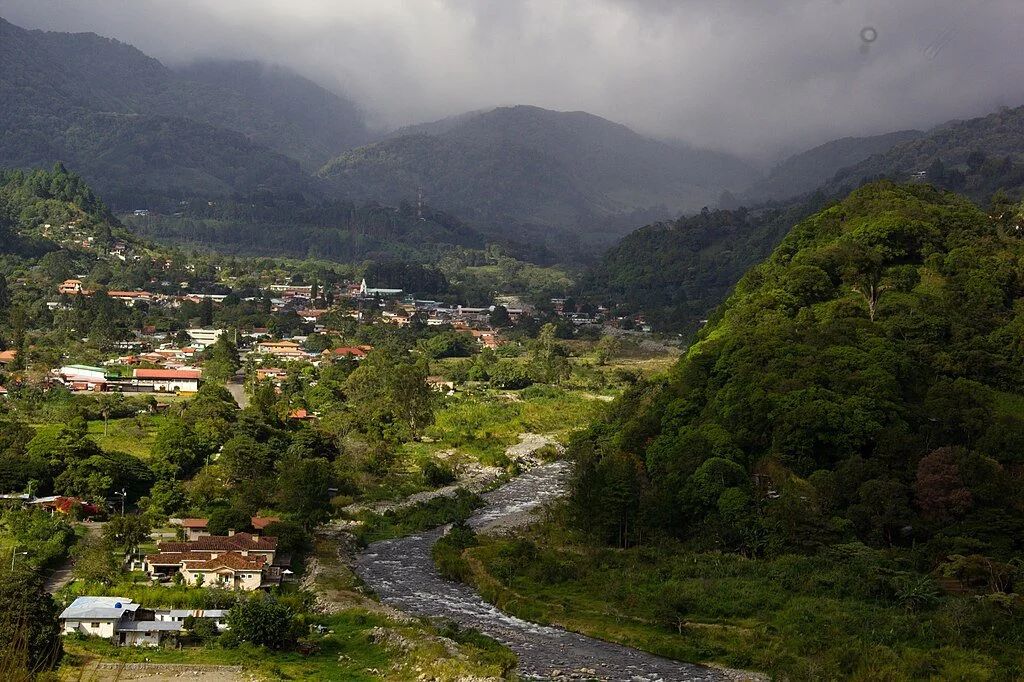
Photo credit: Ayaita, CC BY-SA 3.0
View of the town of Boquete and the Caldera River, Chiriquí Province, Panama.
Panama’s Law 287 on the Rights of Nature has been named one of the 13 finalists for the World Future Policy Award 2025.
Through this law, Panama became only the third country in Latin America to legislatively recognize the Rights of Nature and its intrinsic value, granting Nature the legal rights to exist, regenerate, and thrive. This landmark legislation sets a powerful global precedent for ecological justice and inspires other nations to follow.
The World Future Policy Award (WFPA), established in 2009, is the world’s leading prize for policy solutions. This year, the WFPA honors exemplary policies that foster and enable a paradigm shift in the way we treat and respect Nature—the foundation of all life. Being selected as one of only 13 finalists is a powerful recognition of Panama’s visionary leadership.
Earth Law Center is honored to have supported the development of this transformative law, a testament to Panama’s global leadership and to the growing movement toward a future where humanity and Nature thrive together.
Please read on for World Future Policy Award’s press release on this year’s finalists:
Policies from around the world showcase pioneering approaches to living in harmony with nature and safeguarding future generations.
Hamburg, 23 September 2025 – The World Future Council today revealed the 13 policy finalists competing for the 2025 World Future Policy Award, which honours laws and policy frameworks that safeguard Nature and the rights of future generations.
The World Future Policy Award (WFPA), established in 2009, is the world’s leading prize for policy solutions. This year, the WFPA recognises exemplary policies that foster and enable a paradigm shift in policy making in the way we treat and respect Nature – the foundation of all life.
Forty-one nominations from 21 countries were received, from which 13 finalists were selected. These laws have developed holistic solutions that go beyond the protection of nature and thus enable life in harmony with nature. The laws make an outstanding contribution to the well-being of present and future generations of all living beings on Earth.
The 13 Finalists are
National/regional legislations
Aotearoa New Zealand: Te Awa Tupua (Whanganui River Claims Settlement) Act (2017)
Austria: Environmental Ombudsoffice of Tyrol (Tiroler Umweltanwaltschaft), (1991/2005)
Bhutan: Biodiversity Act (2022)
Japan: Basic Act on Biodiversity (2008)
Norway: Nature Diversity Act (2009)
Panama: Law 287, which recognises the Rights of Nature and the related obligations of the State with these rights (2022)
South Africa: National Environmental Management: Biodiversity Act, 2004 (NEM:BA) (2004)
Spain: Law 19/2022 Granting Mar Menor and its basin status of a legal person (2022)
Uganda: The National Environment Act (2019)
United Arab Emirates: Federal Law No. 24 of 1999 on the Protection and Development of the Environment, (1999)
Global/international frameworks
European Union: Nature Restoration Law (EU Regulation) (2024)
International: BBNJ – Agreement under the United Nations Convention on the Law of the Sea on the Conservation and Sustainable Use of Marine Biological Diversity of Areas beyond National Jurisdiction (2023)
International: Kunming-Montreal Global Diversity Framework GBF (2022)
More detailed information on the finalists can be found at the end of this document.
“Since 2009, the World Future Council has honoured policies that tackle the world’s most pressing challenges,” said Neshan Gunasekera, CEO of the World Future Council. “This year’s theme goes beyond urgent. It is existential. To safeguard life on Earth, decision-making must embrace principles of Earth trusteeship, inspired by Indigenous wisdom such as the Kaitiakitanga from the Māori world view and other knowledge systems. We are delighted to see how this year’s finalists are putting these into action.”
The 2025 Award is presented by the World Future Council in partnership with the International Union for Conservation of Nature (IUCN) and the Inter-Parliamentary Union (IPU). Winners will be announced at a high-level ceremony during the IUCN World Conservation Congress in Abu Dhabi in October 2025.
Media Contacts - World Future Policy Award
Miriam Petersen
M: miriam.petersen@ext.worldfuturecouncil.org
T: +(0)353-894826484
Senior Programme Officer
Samia Kassid
M: samia.kassid@worldfuturecouncil.org
T: +49 (0) 40 3070914-0
About the World Future Policy Award 2025
https://www.worldfuturecouncil.org/p/living-in-harmony-with-nature-and-future-generations/
About the World Future Policy Award
The World Future Policy Award celebrates top policy solutions for us and generations to come. We raise global awareness for exemplary laws and policies, accelerating policy action toward a common future, where every person lives in dignity on a healthy, sustainable planet. Each year we focus on one topic where progress is particularly urgent and receive nominations from across the globe.
About the World Future Council
The World Future Council envisions a healthy planet with just and peaceful societies, both now and in the future. We are dedicated to identifying, developing, and promoting future-just solutions to the most pressing challenges humanity faces today. Founded in 2007 by Jakob von Uexkull, creator of the Alternative Nobel Prize, the Council is composed of 50 eminent global changemakers from civil society, science, politics, and business, who convene annually at the World Future Forum.
Detailed Policy Information
Aotearoa New Zealand: Te Awa Tupua (Whanganui River Claims Settlement) Act (2017)
By conferring a legal personality to the river, the Te Awa Tupua Act reflects the deep ancestral relationship the Whanganui Iwi (tribes) have with the sacred waterway and gives them legal means to protect it. The Act affirms the river as a living, indivisible entity. The Ruruku Whakatupua 2014 and the Te Awa Tupua Act 2017 are both crucial documents related to the legal recognition and protection of the Whanganui River. While the Ruruku Whakatupua 2014 is the settlement agreement that laid the groundwork for the legal recognition of the Whanganui River, the Te Awa Tupua Act 2017 is the legislative enactment that formalised this recognition and provided the river with legal personhood. This is closely linked to the colonisation of Aotearoa New Zealand by the British and the subsequent conflicts and wars in the 19th century. It is enacted to resolve long-standing Treaty grievances and reflects a respect of the Crown for Māori worldviews and integrates Māori principles into New Zealand’s legal framework. It establishes innovative model of co-governance—embodied by the dual office of Te Pou Tupua—bridging Western statutory law and tikanga and for the first time Indigenous peoples and the government or the Crown have entered a partnership to protect the natural environment for the benefit of present and future generations. The steps taken to implement the Act, e.g. Te Pūwaha (revitalisation of the Port of Whanganui) shows that the Whanganui model should be understood as an Indigenous law model, not only a rights of Nature model.
Austria: Environmental Ombudsoffice of Tyrol (Tiroler Umweltanwaltschaft) (1991/2005)
The Environmental Ombudsoffice of Tyrol (Tiroler Umweltanwaltschaft) is an institutionalised Environmental Ombudsperson mandated to represent Nature and the public interest in environmental protection matters in Tyrol, Austria. Introduced originally in the 1990s and legally embedded in the Tiroler Naturschutzgesetz 2005, the Ombudsoffice serves as an independent body participating in official approval procedures concerning environmental impact and informing and advising citizens. It acts as a bridge between civil society and construction entrepreneurs, ensuring ecological concerns are factored into land use, infrastructure, and conservation planning. Its innovative outreach and participatory programmes, such as Citizen Biotopes and youth engagement projects, exemplify democratic, inclusive approaches to fostering a culture of living in harmony with Nature and Future Generations. The underlying future vision is grounded in the philosophy of interconnectedness and respect towards all life forms, not limited to humans. Central motivation lies in redefining the relationship between humans and their environment, going beyond regulatory enforcement to foster cultural and emotional connections with Nature.
Bhutan: Biodiversity Act (2022)
The Biodiversity Act of Bhutan 2003 (amended in 2022) establishes the legal foundation for the conservation, sustainable use, and equitable sharing of the country’s biological and genetic resources. It affirms Bhutan’s rights over these resources and regulates access through enforceable mechanisms such as Prior Informed Consent, Material Transfer Agreements, and Benefit-Sharing Contracts. Administered by the National Biodiversity Centre, the Act integrates traditional knowledge and scientific governance within a rights-based framework. The 2022 amendment strengthened compliance with the Nagoya Protocol, streamlined regulatory processes, and enhanced institutional oversight.
Japan: Basic Act on Biodiversity (2008)
Enacted in 2008, Japan’s Basic Act on Biodiversity is a national legal instrument designed to promote the conservation and sustainable use of biodiversity in alignment with global commitments under the Convention on Biological Diversity (CBD). It mandates the regular formulation and revision of national and local biodiversity strategies and introduces key principles such as coexistence with nature, intergenerational equity, and biocultural integration. Developed with strong civil society participation and broad stakeholder input, the Act consolidated fragmented biodiversity legislation into a unified and strategic framework. It uniquely combines legal mandates with traditional ecological knowledge, encourages citizen engagement, and calls for coordination across government levels and sectors, setting a precedent for participatory and adaptive biodiversity governance.
Norway: Nature Diversity Act (2009)
The Nature Diversity Act (NDA) of Norway, enacted in 2009, is a comprehensive framework governing the conservation and sustainable use of biological, geological, and landscape diversity. It replaces and consolidates earlier fragmented laws by applying uniformly across all sectors and ecosystems. The Act emphasises intergenerational equity, the intrinsic value of biodiversity, and the precautionary principle. It mandates public authorities to consider environmental impact in decision-making and incorporates Indigenous knowledge, notably that of the Sámi people. With judicial mechanisms for appeal and public participation the NDA sets high legal standards for biodiversity governance.
Panama: Law 287, which recognises the Rights of Nature and the related obligations of the State with these right (2022)
Law No 287 of 2022, formally titled “Law Recognising the Rights of Nature and the Obligations of the State Related to These Rights,” grants legal personhood to Nature within the Republic of Panama. It introduces a suite for rights for ecosystems and living beings, including the rights to exist, persist, regenerate life cycles, and be restored following harm. The law embeds ecocentric legal principles such as the precautionary approach and “in dubio pro natura”, and explicitly mandates state and citizen responsibility for safeguarding these rights. It has already been judicially enforced in high-profile environmental litigation and is shaping national discourse, legislation, and activism towards a more nature-centric governance paradigm.
South Africa: National Environmental Management: Biodiversity Act, 2004 (NEM:BA)(2004)
NEM:BA establishes the legal framework for sonserving South Africa’s exceptional biodiversity with around 95 000 described species across nine terrestrial biomes. It creates the South African National Biodiversity Institute (SANBI) and a Scientific Authority; mandates strategic tools (National Biodiversity Framework (NBF), bioregional plans, Biodiversity Management Plans (BMP)); regulates threatened and invasive species, genetically modified organisms and bioprospecting; and embeds public participation, cooperative governance, and intergenerational equity. It aligns national practice with the Convention on Biological Diversity (CBD) and CITES (Convention on International Trade in Endangered Species of Wild Fauna and Flora) while explicitly rooting biodiversity management in section 24 of the Constitution.
Spain: Law 19/2022 Granting Mar Menor and its basin status of a legal person (2022)
Law 19/2022 grants legal personality to the Mar Menor Lagoon and its basin, recognising the ecosystem as a subject of rights. The law includes the right to exist, evolve naturally, be protected, conserved, and restored. Articles 3 and 4 of the law assign legal guardianship and representation for the Lagoon to Public Administration, with support from the local community and establishes three participatory governance bodies: a Committee of Representatives, a Monitoring Commission, and a Scientific Committee. This legal framework aims to halt ecological degradation caused by decades of pollution from agriculture, mining, and tourism, and enables any person or organisation, national or international, to bring legal action in defence of the lagoon. The law marks a legal paradigm shift from anthropocentric to ecocentric jurisprudence and aligns with broader movements for the rights of Nature and protection of future generations. It challenges the historically human-centered approach of environmental law, enabling Nature to express its own needs within legal forums. The law prioritises intergenerational equity through a dual temporal and spatial focus. It protects future generations while centering ecosystems themselves as subjects of rights. By legally acknowledging the ecosystem’s right to develop, recover, and function according to its own internal processes, the law ensures sustained environmental integrity for both present and future communities.
Uganda: The National Environment Act (2019)
The National Environment Act 2019 is Uganda’s principle legislation for environmental protection and management. It replaces the 1995 law and introduces a more comprehensive legal framework reflecting current environmental challenges and international obligations. The Act empowers the National Environment Management Authority (NEMA) as the coordinating and regulatory body for all environmental activities in Uganda. It reinforces the role of environmental and social impact assessments (ESIAs), introduces strategic environmental assessments (SEAs), and outlines provisions for pollution control, sustainable use of ecosystems, biodiversity conservation, and management of hazardous substances. Notably, it recognises the rights of Nature and the duty to maintain a clean and healthy environment for current and future generations.354 Its explicit acknowledgment of Nature’s intrinsic value and integration of environmental sustainability principles reflects a deliberate commitment to intergenerational equity
United Arab Emirates: Federal Law No. 24 of 1999 on the Protection and Development of the Environment, (1999)
Federal Law No. 24 of 1999 serves as the foundational pillar of environmental legislation in the United Arab Emirates. As the country’s primary environmental framework law, it sets comprehensive standards for ail, water, and soil protection, mandates environmental impact assessments (EIAs), and elevates biodiversity conservation to a national priority.277 The law regulates pollution, hazardous waste, and natural resource use across emirates and aligns federal action with international conventions such as CBD, CITES, and Ramsar.278 The law creates institutional mandates for federal and emirate-level coordination and supports voluntary action, awareness campaigns, and civic responsibility in environmental matters. In practice, it has led to improved environmental awareness, protected area expansion, pollution reduction, and inter-agency coordination. It continues to serve as the legislative backbone for the UAE’s agenda and biodiversity protection efforts.279 280 It mandates national biodiversity strategies and action plans, which address both biodiversity conservation and restoration.281 The ongoing legal reform ensures it remains responsive to evolving environmental and societal challenges while keeping future generations into account.282
European Union: Nature Restoration Law (EU Regulation) (2024)
As a key element of the EU Biodiversity Strategy, the EU Nature Restoration Law aims to reverse biodiversity loss and ecosystem degradation across all EU Member States. Enshrined as Regulation (EU) 2024/1991, the law mandates Member States to restore at least 20% of degraded terrestrial and marine ecosystems by 2030, with progressive targets for 2040 and 2050. It builds upon prior EU directives, particularly the Birds and Habitats Directives, and establishes a legally binding obligation to restore habitats and species. Restoration measures are required for a wide range of ecosystems including urban areas, agricultural land, rivers, peatlands, forests, and marine zones. The regulation is directly applicable in all Member States without requiring national transposition. Monitoring and enforcement are overseen by the European Commission and the European Environment Agency. The policy is deeply rooted in participatory and science-based governance, aiming for cross-sectoral coherence and long-term socio-ecological resilience. it does not explicitly refer to Earth Trusteeship, its systemic focus on ecological integrity, intergenerational equity, and the rights of nature aligns with key tenets of Earth stewardship. The law mandates protection for restored areas and requires inclusive planning processes that consider the well-being of both present and future generations.
Agreement under the United Nations Convention on the Law of the Sea on the Conservation and Sustainable Use of Marine Biological Diversity of Areas beyond National Jurisdiction, in short BBNJ Agreement, (2023)
The BBNJ Agreement is an international treaty adopted in 2023 under the United Nations Convention on the Law of the Sea (UNCLOS). It addresses the conservation and sustainable use of marine biological diversity in areas beyond national jurisdiction. The treaty covers four main areas: marine genetic resources and benefit-sharing; area-based management tools including marine protected areas; environmental impact assessments; and capacity building and marine technology transfer. It introduces new governance structures, promotes global cooperation, and seeks to balance ecological protection with equity and scientific advancement. The BBNJ Agreement explicitly refers to the responsibility of present generations to act as stewards of the oceans on behalf of both current and future generations. It also embeds principles such as the common heritage of humankind, the ecosystem approach, and intergenerational equity within its general provisions. Although the term “Earth Trusteeship” is not used, the spirit of trusteeship is reflected in the institutional and ethical orientation of the Agreement. The treaty reinforces duties to care for ocean ecosystems not only as resources but as entities with intrinsic value, thereby acknowledging Nature’s rights in a functional if not legalistic sense.
International: Kunming-Montreal Global Diversity Framework GBF (2022)
The Kunming-Montreal Global Biodiversity Framework (GBF), adopted in December 2022 under the Convention on Biological Diversity, is a landmark agreement aiming to halt and reverse biodiversity loss by 2030. It sets out four long-term goals for 2050 and 23 action targets for 2030, including the global “30x30” conservation target. The Framework was developed through an inclusive process involving governments, Indigenous Peoples and local communities, scientists, and civil society. It promotes a rights-based, participatory, and science-driven approach and addresses the root causes of biodiversity loss through systemic change. Though not legally binding, the GBF has already influenced national and regional policies and includes mechanisms for monitoring, resource mobilisation, and adaptive implementation. It aligns with the Sustainable Development Goals and the Paris Agreement and promotes intergenerational equity and Nature stewardship. The GBF provides a shared roadmap for transformative biodiversity governance worldwide.
Five Rights of Nature and Ecocentric Law-related Motions to be Voted Upon at Upcoming IUCN World Conservation Congress
The Rights of Nature and ecocentric law-related motions are heading to the IUCN World Conservation Congress from October 9 to 15, 2025 — a crucial international event held once every four years. After completing the online discussion period, the IUCN Motions Working Group has referred a motion drafted by Earth Law Center, Motion 067: “Living in harmony with rivers through the rights of nature and ecocentric law,” and other ecocentric law-related motions to the Members’ Assembly for live debate and vote during the Congress.
FOR IMMEDIATE RELEASE
September 16, 2025
Media Contacts:
Grant Wilson, ELC Executive Director, gwilson@earthlaw.org, 510-566-1063
Gayle Carda, ELC International Legal Counsel, gcarda@earthlaw.org, 503-312-5358
Rights of Nature Motions at the IUCN
Rights of Nature and ecocentric law-related motions are heading to the IUCN World Conservation Congress from October 9 to 15, 2025 — a crucial international event held once every four years.
After completing the online discussion period, the IUCN Motions Working Group has referred a motion drafted by Earth Law Center (ELC), Motion 067: “Living in harmony with rivers through the rights of nature and ecocentric law”, and other ecocentric law-related motions to the Members’ Assembly for live discussion and a vote during the Congress (you can read the complete working group update here). ELC’s motion has 14 co-sponsors (listed below), and special thanks are due to International Rivers for helping with this motion.
This is a pivotal moment to unite IUCN Members behind a bold vision: the Rights of Nature and ecocentric law redefine our relationship with ecosystems—from domination to respectful coexistence.
The ecocentric law-related motions scheduled for the Members’ Assembly are:
Motion 067: Living in harmony with rivers through the rights of nature and ecocentric law - Proposed by ELC with 14 co-sponsors.
Motion 054 - Operationalising the rights of nature through their implementation in territories
Motion 055 - Recognition of the rights of Antarctica
Motion 056 - Advancing an ethical human-ocean relationship
How can you help?
Vote in support of Motions 067, 054, 055, 056 and 070 (if you are attending the Congress in person).
Respectfully encourage other IUCN Members to do the same by sharing:
That IUCN Res. 5.100 supports this shift toward ecocentric law; and
Why now is the time to show IUCN that Rights of Nature and ecocentric law are key to a just, sustainable future.
Remote or in-person participation is possible for representatives of IUCN constituents who have fully registered for IUCN Congress. If that’s you, please join our contact group to discuss and endorse the motion’s language (during the virtual contact sessions or if you are attending the Congress in person).
Shoutout to the proponents of the other motions: Les Eco Maires, Wilderness Foundation Africa, Gallifrey Foundation, & SEO/BirdLife (who all represent larger coalitions of advocates and supporters). Earth Law Center is proud to be a co-sponsor of these important motions!
Shoutout to co-sponsors of the rivers motion (067): Community Action for Nature Conservation (Kenya), Center for Biological Diversity (USA), Asociación Ak' Tenamit (Guatemala), Corporación ECOPAR (Ecuador), Stop Ecocide International (UK), Institute for Nature Conservation in Albania (Albania), ASU Center for Biodiversity Outcomes (USA), Ecological Society of the Philippines (Philippines), Synchronicity Earth (UK), Climate Action Network Tanzania / Climate Action Network Tanzania (CAN Tanzania) (Tanzania), Environment-People-Law (Ukraine), Wetlands International (The Netherlands), Nature Conservation Centre (Doğa Koruma Merkezi Vakfi) (Türkiye), and COICA ORG (Ecuador).

“The Animals’ Lawsuit Against Humanity” to show at Climate Week NYC on Sept. 24th, Exploring Interfaith Environmentalism and the Animal Rights Movement
During the 2025 Climate Week NYC, Earth Law Center will host a live reading of the 1,000 year old story “The Animals’ Lawsuit Against Humanity” at the Five Angels Theater. The play, which follows a group of animals who take humans to court for their poor treatment, alludes to the work of Earth Law Center and the broader Rights of Nature movement in ingraining the rights of animals and other natural entities into law.
FOR IMMEDIATE RELEASE: September 12, 2025
Contacts:
Grant Wilson: gwilson@earthlaw.org
Ciara Shea: cshea@earthlaw.org

New York, NY, September 24, 2025 – Earth Law Center (ELC) will host a live showing of the 1,000-year-old story “The Animals’ Lawsuit Against Humanity” at Five Angels Theater in Manhattan. The play, which follows a group of animals who take humans to court for their poor treatment, offers an artistic window onto the work of ELC and the broader Rights of Nature movement in ingraining the rights of animals and other natural entities into law.
Although the roots of “The Animals’ Lawsuit Against Humanity” trace to India, Muslim scholars of a Sufi order in Iraq first wrote the story in the 10th century CE. Later, in the 14th century, the Christian king of Anjou ordered Rabbi Kalonymus ben Kalonymus to translate the Arabic version into Hebrew and Latin, and it has long been an important tale in Muslim and Jewish communities. Rabbi Anson Laytner and Rabbi Dan Bridge translated and adapted the story from Hebrew into English back in 2005, and Laytner adapted it for the theater in 2024.
Laytner and Bridge’s translation has been hailed across religious traditions. The Islamic philosopher Seyd Hossein Nassar called it a “fascinating story of enduring spiritual worth and great current significance.” It has already made its way to schools in England, music festivals in Singapore, and more. Laytner also made it the focus of his recent novel, “The Forgotten Commandment.”

Although “The Animals’ Lawsuit Against Humanity” is an ancient tale, its themes are especially valuable in light of the current ecological crisis, and speak to the ways in which legal systems can be used to enact rights for animals and ecosystems. In the play, humans move to an island previously inhabited only by animals and begin to exploit the animals for their own gain. Upset by their exploitation, the animals appeal to the King of the Jinn, who oversees a trial between the humans and animals. The trial itself is the focus of the play, as animals lament the human disregard for animal life, proclaiming, “There we are in the marketplace, being chopped up and sold, and that’s us! That’s our bodies, that’s our babies!” On the other side, some of the play’s humans argue that animals are rightless entities ripe for unfettered human use, while other humans, who could be described as environmentalists, align with the animals’ arguments.

Rabbi Anson Laytner

ELC Executive Director Grant Wilson
Rabbi Laytner will speak as part of an interfaith panel after the theatrical reading during Climate Week. He celebrates the play’s interfaith approach to environmentalism, saying, “The message of this tale is shockingly contemporary, but equally surprising is its interfaith history which shows that the Abrahamic faiths all have strong teachings about how to care for other living things.
Speaking to the conflict between animal rights and human exploitation, Grant Wilson, Executive Director of Earth Law Center (ELC), describes the relevance of “The Animals’ Lawsuit Against Humanity” to modern ecocentrism: “This ancient fable, over a thousand years old, mirrors the stark injustices that animals still face today: being treated as mere property and inferior to humans, both culturally and legally, with no formal rights of their own. In truth, humans are merely one small element in the vast, interconnected web of life. It’s time for our society and laws to recognize this reality.”
ELC, which is sponsoring this theatrical reading of “The Animals’ Lawsuit Against Humanity,” has played a notable role in enshrining the Rights of Nature and animal rights across the globe. Focused particularly on animal rights, along with its partner organization, The Leatherback Project, ELC urged the creation of a national law in Panama protecting sea turtles, which was passed in 2023. In the U.S., ELC and partners have advocated for the rights of rivers, forests, and Southern Resident Orcas, amongst others. There are countless related campaigns globally.
ELC’s work is part of a broader global movement to advance the Rights of Nature and the rights of specific animals. In 2008, Ecuador was the first country to add a Rights of Nature amendment to its constitution, and since then, Bolivia, Panama, Spain, Uganda, and others have also enshrined the Rights of Nature into national laws. “The Animals’ Lawsuit Against Humanity” captures the historical precedent for the broader Rights of Nature and animal rights movements.
The play “mirrors the efforts of advocates across the world to recognize and defend the rights of ecosystems and species based on the reality that all life has a right to exist,” says Wilson. “Many of the arguments that the animals make in the play are the same ones made by ‘Earth lawyers’ in the courts today as they seek to create legal frameworks that represent all life, not only humans.”
“The Animals’ Lawsuit Against Humanity” will be produced by Liv Boren and Chris Dooly of Jack & Grace Productions and will be performed on September 24th at Climate Week NYC. Liv and Chris were drawn to this project because, “at a time when the natural world is under threat, there is power and wisdom in the tales of our past. J&G is thrilled to bring this show to life with Earth Law Center at Climate Week NYC, where we have the potential to reach young minds and foster real, long-lasting change.”
For tickets, please follow this link.
Actors Include:
Interfath panel:
Anson Laytner, speaking on Judaism
Claudio Carvalhaes, speaking on Christianity
Zehra Abbas, EcoMuslim Alliance
Isra Hirsi, Panel Moderator
Introduction from:
Grant Wilson, Executive Director, Earth Law Center

Victory for Conservation: Washington State Budget Secures Critical Funding to Protect Elwha Watershed
In a major win for environmental protection, the final Washington State legislative budget agreement for 2025 includes $250,000 to begin the process to secure protection for the Elwha River Watershed — a vital source of drinking water, critical habitat for salmon and other wildlife, as well as cultural heritage.
FOR IMMEDIATE RELEASE: May 8, 2025
Contacts: Elizabeth Dunne (edunne@earthlaw.org)
Brel Froebe (brel@c4rf.org)

Photo Credit: Scott F. McGee @forest2sea
OLYMPIA, WA — In a major win for environmental protection, the final Washington State legislative budget agreement includes $250,000 to begin the process to secure protection for the Elwha River Watershed — a vital source of drinking water, critical habitat for salmon and other wildlife, as well as cultural heritage.
The newly approved budget allocates funding for the Washington Department of Natural Resources (DNR) to begin formal assessments required for the creation of a Natural Resources Conservation Area (NRCA) in the Elwha Watershed. This move should help bring forest practices into alignment with the $328 million already spent on river restoration after the Elwha River became one of the largest dam removal projects in US history.
The City of Port Angeles has asked DNR multiple times to pause logging in the Elwha Watershed and consider different stewardship approaches. The Elwha River is the sole water source for Port Angeles and for 25% of Clallam County.
NRCAs protect native ecosystems, habitat for endangered, threatened, and sensitive plants and animals, scenic landscapes, and places of cultural and historical significance. Currently, more than 127,000 acres are protected across Washington’s 39 NRCAs — and the Elwha may soon join their ranks.
Senator Mike Chapman, Chair of the State Senate Agriculture and Natural Resources Committee, explained that he championed the measure because “we need a well thought out solution to what’s happening with the forest lands in the Elwha Watershed. This gives us the opportunity to work collaboratively on the bigger picture, to identify priority areas for conservation, and to use the tools we have to buy replacement lands in areas better suited for logging.”
The push to conserve the Elwha Watershed has grown steadily since 2022, when community outcry followed a major DNR timber sale that clearcut mature forests near the river. That outcry sparked the formation of the Elwha Legacy Forests Coalition, a broad alliance of tribal citizens, conservationists, scientists, and local leaders calling for a more sustainable vision for forest and ecosystem management in the watershed.
In 2023, legal action from the Earth Law Center challenged another proposed timber sale — and former Commissioner of Public Lands Hilary Franz ultimately canceled it. “Exploring the creation of an NRCA in the Elwha Watershed is an important next step toward a stewardship framework that sees the forest, river, salmon, and all of us an interconnected whole,” said Elizabeth Dunne, Earth Law Center’s Director of Legal Advocacy.
“We worked tirelessly to remove the dams that blocked salmon from migrating up the Elwha River. Our Salmon are returning, but intact forest ecosystems are essential to the success of restoration efforts led by our people. Nature has to be in balance. My hope is that this work will return us to a more respectful relationship with the landscape,” said Ms. Linda Wiechman, Lower Elwha Klallam Tribal elder and member of the Elwha Legacy Forests Coalition. “We have harvested native plants from these forests since time immemorial. These are our usual and accustomed gathering areas. Part of our way of life.”
Center for Responsible Forestry and Earth Law Center, which has an ongoing campaign to protect the Elwha Watershed, assisted with the measure.

Marí Luz Canaquiri Murayari Wins 2025 Goldman Environmental Prize for Securing Legal Rights for Peru’s Marañón River
Earth Law Center (ELC) proudly congratulates Mrs. Marí Luz Canaquiri Murayari, a Kukama Indigenous leader from Peru, on receiving the 2025 Goldman Environmental Prize. She received this global recognition for her landmark achievement in securing legal personhood for the Marañón River, a critical tributary of the Amazon. As President of the Huaynakana Kamatahuara Kana (HKK), a federation of Kukama Indigenous women, Canaquiri led the legal battle to recognize the river’s inherent rights, ensuring its protection from industrial threats such as oil drilling and infrastructure projects.
FOR IMMEDIATE RELEASE
April 21, 2025
Media Contacts:
Constanza Prieto-Figelist, ELC Latin America Legal Director, cpfigelist@earthlaw.org, 202-621-3877
Grant Wilson, ELC Executive Director, gwilson@earthlaw.org, 510-566-1063
Earth Law Center Celebrates a Historic Victory for Indigenous-Led Environmental Justice
San Francisco, CA – Earth Law Center (ELC) proudly congratulates Mrs. Marí Luz Canaquiri Murayari, a Kukama Indigenous leader from Peru, on receiving the 2025 Goldman Environmental Prize. She received this global recognition for her landmark achievement in securing legal personhood for the Marañón River, a critical tributary of the Amazon. As President of the Huaynakana Kamatahuara Kana (HKK), a federation of Kukama Indigenous women, Canaquiri led the legal battle to recognize the river’s inherent rights, ensuring its protection from industrial threats such as oil drilling and infrastructure projects.

Marí Luz Canaquiri Murayari
ELC, which supported the legal case alongside Peruvian Indigenous organizations and environmental advocates, hails Canaquiri’s courageous leadership and deep commitment to Indigenous environmental stewardship.
"Mariluz embodies fearless leadership, standing up to powerful adversaries to defend the voice of the Marañón River, her Kukama sisters, future generations, and all of humanity,” said Constanza Prieto-Figelist, ELC’s Latin America Legal Director. “Her courage inspires me every day—I can only be grateful and honor her in this moment."
A Groundbreaking Legal Precedent
In March 2024, Canaquiri and the HKK, with the support of Instituto de Defensa Legal (IDL), ELC, International Rivers, and other allies, filed a constitutional lawsuit asserting the Marañón River’s right to exist, flow freely, and be free from pollution. This historic case culminated in a ruling by the Mixed Court of Nauta, which recognized the river as a legal entity and established the Kukama people as its guardians.
Despite pushback from Peru’s government and Petroperú, the Civil Court of Loreto upheld the ruling in October 2024, reinforcing the legal standing of the river’s rights and affirming Indigenous stewardship. ELC played a key role in developing legal arguments, providing technical expertise, and advocating for the river’s recognition in collaboration with Peruvian partners.
“The rights recognized for the Marañón River improve its protection, to the extent that they establish limits for the State and private enterprise,” said Juan Carlos Ruiz, a lawyer at IDL who represented Canaquiri and HKK in the case. “Any action by the State that violates or ignores these rights is null and void. Thus, for example, the discharge of acidic waters into rivers after extracting oil, instead of reinjecting those waters into the wells, will be null and void.”
A Lifelong Advocate for the Marañón and Indigenous Rights
For over three decades, Canaquiri has worked to empower Indigenous women and defend Kukama lands and waters. She co-founded the Federation of Kukama Indigenous Women, bringing together women from 30 Indigenous communities to promote cultural survival, environmental protection, and legal recognition of their ancestral territories.
In addition to her legal advocacy, Canaquiri has been a cultural and political leader, raising international awareness about threats to the Marañón River. She co-produced the documentary Karuara, People of the River, which highlights the spiritual and ecological importance of the river to the Kukama people. In 2023, her work was recognized with the Terre de Femmes International Award, celebrating women dedicated to environmental protection.
A Global Movement for the Rights of Nature
ELC has long advocated for the legal personhood of rivers, forests, and ecosystems worldwide, contributing to landmark developments such as a national law on the Rights of Nature and ecocentrism in Panama, the inclusion of support for the Rights of Nature and Mother Earth-centric actions in the Global Biodiversity Treaty, and now the legal personhood and Indigenous co-guardianship of the Marañón River in Peru. Marí Luz Canaquiri’s victory is part of a growing global movement recognizing that Nature has rights, just as humans do.
“The landmark victory for the rights of the Marañón River demonstrates that those who have long served as river guardians in a cultural sense are perfectly suited to serve as Nature’s legal guardians, as well, once the rights of rivers are recognized,” said Grant Wilson, Executive Director of ELC. “Humans are part of, not separate from, the natural world—and the law is finally beginning to reflect that reality through the Rights of Nature movement.”
About Earth Law Center
Earth Law Center is a nonprofit organization dedicated to transforming legal systems to recognize and uphold the Rights of Nature. Through litigation, policy work, and global advocacy, ELC partners with Indigenous Peoples, governments, and legal experts to represent Nature in courtrooms and legislatures worldwide.
For more information about Earth Law Center’s work and the Marañón River case, visit https://www.earthlawcenter.org/latam-program.

World Water Day Highlights Sacred Relationship with World-Renowned Elwha River
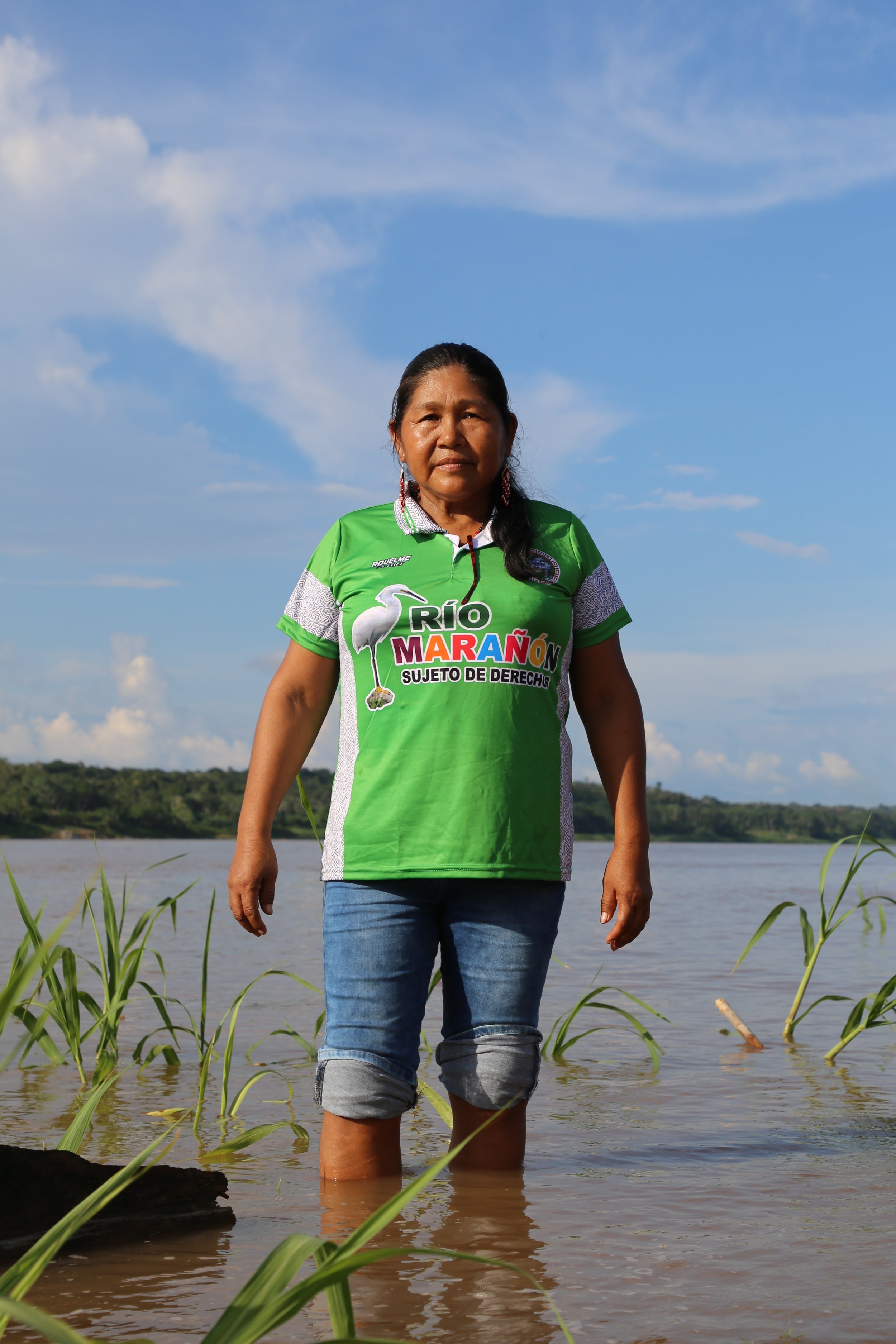
PORT ANGELES, WA ~ On March 22, 2025, World Water Day, the Elwha Legacy Forests Coalition and Earth Law Center invite everyone to gather at Hollywood Beach in Port Angeles, WA at 11:00am to witness a welcoming and opening speakers, and enjoy music performed by Star Nayea, Indigenous Grammy award winning artist. Special guest speakers include Frances Charles, Chairwoman of the Lower Elwha Klallam Tribe, who was instrumental in bringing down the two dams that choked the Elwha River for over a century. Until October 2024, the Elwha River dam removal was the largest in US history, now surpassed only by the free flowing Klamath River.

F O R I M M E D I A T E R E L E A S E
March 17, 2025
Contact: Elizabeth Dunne (Earth Law Center) • (808) 554-1409
Tashena Francis (Lower Elwha Klallam Tribal citizen) • (360) 912-5668
Freddie Lane (Lummi Nation elder) • (360) 391-7560
PORT ANGELES, WA ~ On March 22, 2025, World Water Day, the Elwha Legacy Forests Coalition and Earth Law Center invite everyone to gather at Hollywood Beach in Port Angeles, WA at 11:00 am to witness a welcoming and opening speakers, and enjoy music performed by Star Nayea, Indigenous Grammy award winning artist. Special guest speakers include Frances Charles, Chairwoman of the Lower Elwha Klallam Tribe, who was instrumental in bringing down the two dams that choked the Elwha River for over a century. Until October 2024, the Elwha River dam removal was the largest in US history, now surpassed only by the free flowing Klamath River.
Tashena Francis of the Lower Elwha Klallam tribe and Freddie Lane, Lummi elder will be co-emcees of the event. At 12:00 Noon, organizers will celebrate with an interfaith Water Blessing with Elwha Klallam tribal members leading ceremonies. At 1:00 pm, there will be a peaceful walk to sŋaʔŋáʔant cáwŋən ʔəssaqɬúŋt (Pebble Beach Park) and rally for protection of Legacy Forests. Guided hikes to local legacy forests depart from Pebble Beach at 2:00 pm. Participants can choose to visit the stretch of forest along the Elwha River that was part of the (now) cancelled “Power Plant” timber sale and hike to the old Elwha dam site. Or experience the rare coastal rainforest near the Sadie Creek campground that advocates continue to try to save, but is slated for logging as part of the “Doc Holliday” timber sale.
For detailed event information about the World Water Day event and an Indigenous Cinema Climate Showcase taking place March 20 and 21 visit: elwhalegacyforests.org/equinox-day-of-forests-water-day-2025/
The Elwha Legacy Forests coalition formed upon discovering that despite over $338 million spent on restoring the Elwha River Watershed post-dam removal, the Washington Department of Natural Resources (DNR) had continued to log older, structurally complex (legacy) forests near the Elwha River. The new Public Lands Commissioner Dave Upthegrove has since paused this type of logging, but that pause does not impact previously approved sales. In December 2024, Earth Law Center along with Center for Whale Research and Orca Network, filed lawsuits challenging the “Parched” and “Tree Well” timber sales that would clear cut 400 acres of the last remaining older forests in and around the Elwha Watershed. The lawsuits allege that the DNR has ignored scientific studies showing the negative impacts of logging mature and old-growth forests on stream flows and fails to respect the rights of future generations.
“Parched” and “Tree Well” are two legacy forest timber sales out of dozens advanced by the prior public lands commissioner. Legacy Forest Defense Coalition has filed 32 appeals in an effort to save legacy forests all around Western Washington. Supporters hope that with some favorable court rulings and enough public pressure, Commissioner Upthegrove will cancel most, if not all, of these sales.
Organizers seek to bring awareness and concern to community members about the threat that deforestation poses to salmon returning to their ancestral homewaters for the first time in over 110-years as well as to the community’s drinking water, recreation and our entire way of life. “Our hope is that these events will inspire people to really think about their relationship with water and the relationship between water and healthy forests,” says Elizabeth Dunne, Director of Legal Advocacy at the Earth Law Center. “Love of place is something we all have in common,” Dunne added.

Star Nayea is a Native Grammy Recording Artist and two time Native American Music Award winning singer/songwriter. She is a soul, rock, contemporary Christian music artist and environmentalist living in Snohomish, Washington. She hosts Native youth empowerment camps “Healing thru the Arts” teaching Native American youth music, video and cultural arts thru music.

Tashena Francis is a Lower Elwha Klallam tribal citizen and member of the Elwha Legacy Forest Coalition. She was born & raised on the Lower Elwha Klallam reservation and is an advocate for preserving the Elwha watershed. Francis believes that saving our forest for future generations is pivotal to address our global climate crisis.

Freddie ‘Sul ka dub’ Lane is an Indigenous environmentalist, activist (and member of the Elwha Legacy Forest Coalition) from the Lummi Nation near Bellingham WA. He is a grassroots organizer hosting the Gathering of the Eagles paddle through the San Juan Islands each May and road manages for the Totem Pole Journeys by House of Tears Carvers.

Elizabeth Dunne is a movement lawyer, Director of Legal Advocacy at the Earth Law Center, and co-founder of the Elwha Legacy Forests Coalition. She lives near the Elwha River Watershed.

New Report Champions Legal and Financial Support for Earth-Centered Laws and Governance Ahead of Biodiversity Negotiations in Cali, Colombia
As countries prepare for the next round of global biodiversity negotiations at COP16, a new report, Ecocentrism in the Global Biodiversity Framework, outlines how developing countries, in particular the least developed countries and small island developing States, can secure portions of the Global Biodiversity Framework Fund (GBF Fund) – intended to reach $200 billion per year by 2030 – to harmonize their legal systems with the laws of Nature under the framework of “Mother Earth centric actions.”
FOR IMMEDIATE RELEASE: October 3, 2024
Contact: Grant Wilson (gwilson@earthlaw.org, +1-510-566-1063)
Cali, Colombia— As countries prepare for the next round of global biodiversity negotiations at COP16, a new report, Ecocentrism in the Global Biodiversity Framework, outlines how developing countries, in particular the least developed countries and small island developing States, can secure portions of the Global Biodiversity Framework Fund (GBF Fund) – intended to reach $200 billion per year by 2030 – to harmonize their legal systems with the laws of Nature under the framework of “Mother Earth centric actions.”
Earth Law Center (ELC), alongside Rights of Mother Earth, Lawyers for Nature, End Ecocide Sweden, and Keystone Species Alliance, released the new report highlighting the potential to include transformative Earth-centered legal commitments in national biodiversity strategies. Specifically, the report calls for countries to incorporate the intrinsic value of Nature, the Rights of Nature (or Rights of Mother Earth), and other ecocentric commitments into their National Biodiversity Strategies and Action Plans (NBSAPs).

Photo courtesy of Samuel LeGrys
NBSAPs are each country’s roadmap to meet the goals of the Kunming-Montreal Global Biodiversity Framework (GBF), the landmark 2022 biodiversity agreement aimed at reversing biodiversity loss and living in harmony with Nature by 2050. The report underscores that we stand at a unique juncture for nations to align with Earth-centered law and governance.
"To halt and reverse the biodiversity crisis, nations must urgently transform their laws and societies to live in harmony with Nature," said Grant Wilson, Executive Director of Earth Law Center and co-author of the report. "The Global Biodiversity Framework presents an unprecedented opportunity to advance the Rights of Nature and other transformative legal paradigms for the planet. For many countries, this could also mean receiving significant financial support, catalyzing a profound shift in how we relate to and protect the natural world."
The report further analyzes NBSAPs as essential roadmaps for implementing the GBF. It highlights countries including Slovenia, Aotearoa New Zealand, and Fiji that have already integrated ecocentric language into their plans. These countries are leading the way toward proving that legal affirmation of the intrinsic value of Nature and supporting the Rights of Nature can help achieve biodiversity targets.
Photo courtesy of Samuel LeGrys
The report also explores how to fund emerging ecocentric law movements. Target 19 of the Global Biodiversity Framework specifically allocates funding for “Mother Earth centric actions,” which are defined as ecocentric and rights-based approaches. This includes a range of commitments, such as Rights of Nature, legal guardianship of ecosystems, and Nature-conscious governance. The funding is primarily aimed at developing nations, presenting an opportunity to secure financial resources that can transform legal and governance systems toward Earth-centered laws. The GBF Fund is already operational and providing funding, as detailed in a chart in Section IV of the report, “Financing,” of approved Project Preparation Grants that highlight ecocentrism and Mother Earth centric actions). Yet it still has a long way to go to meet its $200 billion annual commitment by 2030.
One of the report’s key findings is the recognition of the intrinsic value of Nature itself. This principle is essential to transforming humanity’s relationship with the natural world. It calls for a paradigm shift wherein Nature is recognized not merely as a resource for human use but as a living entity with its own rights and inherent value. This shift is crucial for achieving the Convention’s 2050 vision of "Living in Harmony with Nature."
The report also provides an analysis of how ecocentric legal frameworks can be applied across various cultural and legal contexts to promote Earth-centered laws that support the health of all living beings. While Rights of Nature are an emerging framework in many countries, other ecocentric law movements that give Nature a voice or center the legal system in our connection with the Natural world are taking root in parallel.
Notably, the report was primarily authored by law school and undergraduate interns working alongside sponsoring organizations. These youth advocates, increasingly vocal in their support of Rights of Nature and ecocentric law, will join the Earth Law Center delegation at COP16 to engage with governments on how to implement transformative Earth-centered policies.
***
Additional quotes:
"To achieve COP16’s theme of ‘Peace with Nature,’ acknowledging the Rights of Nature and Mother Earth should be at the top of the priority list of the Biodiversity Convention, not merely in the footnote,” remarked Doris Ragettli, Co-Founder of Rights of Mother Earth. “Just as the Human Rights Declaration paved the way for peace after WWII, we must now make Nature’s rights a global priority."
"Emerging initiatives to protect the Rights of Nature should be central to the journey to protect and restore biodiversity," said Jeremie Gilbert, an affiliate of Lawyers for Nature. "Our report shows that over 30 countries already recognize Rights of Nature through constitutional provisions, laws, or court decisions. Achieving 'Peace with Nature' requires incorporating these rights into biodiversity conservation efforts globally."
"The urgent need for societal transformation to meet the targets of the Convention on Biodiversity is increasingly recognized," stated Pella Thiel, Co-Founder of End Ecocide Sweden. "Truly transformative steps must address the root of the problem, which this paper does, with concrete actions that governments and other actors can take to move toward the Convention’s 2050 goal of living in harmony with Nature."
"It is incredibly inspiring to see people from all over the world with diverse interests uniting to uphold the intrinsic value of Nature,” said Emily Zinkula, a Stanford Law student who contributed to the paper as an intern at ELC. “For many of us, Nature's right to be protected feels intuitive. Seeing ELC and its partners tirelessly work to turn that intuition into a global truth is empowering. The recognition of Nature's Rights by global leaders gives much-needed hope, courage, and validation to a generation longing for it."
“The Animals’ Lawsuit Against Humanity” to Premiere at Climate Week NYC on Sept. 23rd, Exploring Interfaith Environmentalism and the Animal Rights Movement
During the 2024 Climate Week NYC, Earth Law Center will host a live reading of the 1,000 year old story “The Animals’ Lawsuit Against Humanity” at the AIA New York Center for Architecture. The play, which follows a group of animals who take humans to court for their poor treatment, alludes to the work of Earth Law Center and the broader Rights of Nature movement in ingraining the rights of animals and other natural entities into law.
FOR IMMEDIATE RELEASE: September 10, 2024
Contacts:
Grant Wilson, gwilson@earthlaw.org
Ciara Shea, cshea@earthlaw.org
Heather Robertson, hrobertson@earthlaw.org

New York, NY, September 23, 2024 – During the 2024 Climate Week NYC, Earth Law Center will host a live reading of the 1,000-year-old story “The Animals’ Lawsuit Against Humanity” at the AIA New York Center for Architecture. The play, which follows a group of animals who take humans to court for their poor treatment, alludes to the work of Earth Law Center and the broader Rights of Nature movement in ingraining the rights of animals and other natural entities into law.
Although its roots trace to India, Muslim scholars of a Sufi order in Iraq first wrote the story in the 10th century CE. Later, in the 14th century, the Christian king of Anjou ordered Rabbi Kalonymus ben Kalonymus to translate the Arabic version into Hebrew and Latin, and it has long been an important tale in Muslim and Jewish communities. Rabbi Anson Laytner and Rabbi Dan Bridge translated and adapted the story from Hebrew into English back in 2005. The theatrical reading of “The Animals’ Lawsuit Against Humanity” at Climate Week will be the official debut of Laytner’s adaptation of the story into a play.
Laytner and Bridge’s translation has been hailed by luminaries across religious traditions. The Islamic philosopher Seyd Hossein Nassar called it a “fascinating story of enduring spiritual worth and great current significance.” It has already made its way to schools in England, music festivals in Singapore, and more. Laytner also made it the focus of his recent novel, “The Forgotten Commandment.”
Rabbi Anson Laytner
Rabbi Laytner will speak at the theatrical reading during Climate Week. He celebrates the play’s interfaith approach to environmentalism, saying, “The message of this tale is shockingly contemporary, but equally surprising is its interfaith history which shows that the Abrahamic faiths all have strong teachings about how to care for other living things.”
Although “The Animals’ Lawsuit Against Humanity” is an ancient tale, its themes are especially valuable in light of the current ecological crisis, and speak to the ways in which legal systems can be used to enact rights for animals and ecosystems. In the play, humans move to an island previously inhabited only by animals and begin to exploit the animals for their own gain. Upset by their exploitation, the animals appeal to the King of the Jinn, who oversees a trial between the humans and animals. The trial itself is the focus of the play, as animals lament the human disregard for animal life, proclaiming, “There we are in the marketplace, being chopped up and sold, and that’s us! That’s our bodies, that’s our babies!” On the other side, some of the play’s humans argue that animals are rightless entities ripe for unfettered human use, while other humans, who could be described as environmentalists, align with the animals’ arguments.
ELC Executive Director Grant Wilson
Speaking to the conflict between animal rights and human exploitation, Grant Wilson, Executive Director of Earth Law Center (ELC), describes the relevance of “The Animals’ Lawsuit Against Humanity” to modern ecocentrism: “This ancient fable, over a thousand years old, mirrors the stark injustices that animals still face today: being treated as mere property and inferior to humans, both culturally and legally, with no formal rights of their own. In truth, humans are merely one small element in the vast, interconnected web of life. It’s time for our society and laws to recognize this reality.”
As the sponsor of the theatrical reading of “The Animals’ Lawsuit Against Humanity,” ELC has played a notable role in enshrining the Rights of Nature and animal rights across the globe. Focused particularly on animal rights, along with its partner organization, The Leatherback Project, ELC urged the creation of a national law in Panama protecting sea turtles, which was passed in 2023. In the U.S., ELC and partners have advocated for the rights of rivers, forests, and Southern Resident Orcas, amongst others. There are countless related campaigns globally.
Reflecting on this, Squil-le-he-le/Raynell Morris, a Lummi Nation elder, shared her wisdom on the kinship between humans and the natural world: “Everything in creation is our brother and sister. We have to respect everything and give thanks to everything—the winged, the finned, the four-legged, and the two-legged—because they are our relatives.” Morris has long fought for protecting the Southern Resident Orcas based on this kinship relationship, viewing them as “relatives under the sea” and rights holders. She will serve as a panelist after the reading.
ELC’s work is part of a broader global movement to advance the Rights of Nature and the rights of specific animals. In 2008, Ecuador was the first country to add a Rights of Nature amendment to its constitution, and since then, Bolivia, Panama, Spain, Uganda, and others have also enshrined the Rights of Nature into national laws. In 2024, Teresa Vicente won a Goldman Environmental Prize for her work giving legal rights to the Mar Menor salt water lagoon in Spain. “The Animals’ Lawsuit Against Humanity” captures the historical precedent for the broader Rights of Nature and animal rights movements.

The play “mirrors the efforts of advocates across the world to recognize and defend the rights of ecosystems and species based on the reality that all life has a right to exist,” says Wilson. “Many of the arguments that the animals make in the play are the same ones made by ‘Earth lawyers’ in the courts today as they seek to create legal frameworks that represent all life, not only humans.”
Lotus Kay, one of the actors, is a 23-year-old singer-songwriter and author of a children’s book series aimed at educating kids about wildlife and promoting kindness towards the Earth. She said, “This story powerfully conveys the unfair way we view and treat animals, and the important message that animals and Nature should have rights—a perspective increasingly prevalent amongst youth. It is also wonderful to partner with an organization like the Earth Law Center, whose real work is representing the Earth and animals, who don’t have their own voice.”
“The Animals’ Lawsuit Against Humanity” will be produced by Liv Boren and Chris Dooly of Jack & Grace Productions and will be performed on September 23 at Climate Week NYC. Liv and Chris were drawn to this project because, “at a time when the natural world is under threat, there is power and wisdom in the tales of our past. J&G is thrilled to bring this show to life with Earth Law Center at Climate Week NYC, where we have the potential to reach young minds and foster real, long-lasting change.”
To register to attend, please follow this link and consider a $30 recommended donation to support ELC’s work, with a VIP ticket costing $100. Following the theatrical reading, there will be a panel with environmental leaders exploring the play’s applicability to modern-day legal movements and challenges, including the treatment of animals through factory farming.
The reading and panel will also be livestreamed (with watch parties) for those who would like to attend remotely.
Actors Include:
Chris Dooly, Narrator
Lotus Kay, Donkey
Keith Randolph Smith, General Havok
Lee Wilkof, Ox, King Bersaf, Chef Orotundo, Phoenix, Parrot, Fly, King Snake, Frog
Erin Neufer, Horse, Zoey Phile, Falcon, Wasp, Pig, Ima Phud, Snow Leopard
Raquel Chavez, Sheep, Queen Lion, Peacock, Queen Bee, Cricket, Priest
Panelists:
Karen Bradshaw, Professor of Law and Senior Sustainability Scientist Arizona State University
Lindsey Marie Coffey, model, environmentalist, and former Miss Earth
Squil-le-he-le/Raynell Morris, Events and Gatherings Producer, Children of the Setting Sun Productions
Zehra Abbas, EcoMuslim Alliance
Introduction from:
Grant Wilson, Executive Director, Earth Law Center
Anson Laytner, Script writer and author
Event images, social media posts, and headshots available here.
Mujeres Kukama dicen que su río Marañón es un ser vivo: Demanda pionera presentada en Perú
Huaynakana Kamatahuara kana, una federación de mujeres Kukama en el bajo Valle del Marañón, ha presentado una acción legal pionera exigiendo que el gobierno peruano reconozca su río como una persona jurídica.
Huaynakana Kamatahuara kana, una federación de mujeres Kukama en el bajo Valle del Marañón, ha presentado una acción legal pionera exigiendo que el gobierno peruano reconozca su río como una persona jurídica, o "Ser Vivo". Una coalición de organizaciones nacionales e internacionales, incluido el Instituto de Defensa Legal, International Rivers y el Earth Law Center, brindan asistencia y apoyo legal. Una coalición de abogados y académicos canadienses ha presentado un amicus curiae en defensa de la petición.
Para muchos pueblos indígenas como los Kukamas, sus ríos son seres vivos con derechos que deben ser reconocidos y protegidos. El río Marañón es la fuente de alimento, agua y transporte del pueblo Kukama; también es el centro de su universo espiritual. Después de ver cómo su río sufría contaminación durante décadas, especialmente por derrames de petróleo sistémicos que han destruido su frágil ecosistema y sus pesquerías, las mujeres Kukama decidieron emprender acciones legales.
El 8 de septiembre la federación de mujeres y sus abogados de IDL iniciaron una acción judicial en un tribunal peruano para que se reconociera a su río como persona jurídica. La petición demanda a varias entidades gubernamentales de violar los derechos fundamentales del río Marañón, entre ellas Petroperú, la estatal petrolera, el Ministerio de Medio Ambiente y el Ministerio de Energía y Minas.
Huaynakana fue fundada en 2001 para promover los derechos de las mujeres Kukama-Kukamiria y proteger su medio ambiente y cultura. La federación representa a mujeres de 28 comunidades indígenas en el distrito de Parinari en el río Marañón en la región amazónica del norte de Perú.
Abogados y académicos canadienses de tres universidades presentaron un amicus curiae en la corte peruana el 29 de septiembre para respaldar la demanda de Huayanakana. El documento muestra cómo varios gobiernos provinciales han reconocido el derecho de los pueblos indígenas a administrar sus propios recursos. El amicus describe la creciente importancia de la ley indígena dentro del proceso de evaluación del impacto ambiental en Canadá.
Detalles de la acción legal de Huaynakana
Las mujeres Kukama están pidiendo el reconocimiento de derechos específicos para el Río Marañón que incluyen: el derecho a existir, fluir, vivir libre de contaminación, alimentarse y ser alimentado por sus afluentes, y ser protegido, preservado y restaurado. Estos derechos están de acuerdo con la Declaración Universal de los Derechos de los Ríos.
La creciente jurisprudencia comparada en todo el mundo, como el río Atrato en Colombia, el Río Whanganui en Nueva Zelanda y el Río Magpie en Canadá, está otorgando derechos sobre los ríos. Los miembros de Huaynakana dicen que su río también debe protegerse debido a su valor cultural y espiritual.
La Constitución de Perú protege los valores culturales de sus pueblos indígenas y el país es signatario del Convenio 169 de la OIT y de la Declaración Americana de Pueblos Indígenas.
La demanda también pide a Petroperú que lleve a cabo el mantenimiento y reparación de su gasoducto peruano norte con fugas, y el establecimiento de comités locales de gestión de cuencas hidrográficas para garantizar la participación de los pueblos indígenas en la administración y conservación de sus recursos hídricos.
Las mujeres Kukama exigen que el gobierno peruano reconozca a las organizaciones indígenas como guardianes, defensoras y representantes del Río Marañón y sus afluentes. Piden la creación de los “Guardianes del Río Marañón”, institución que representaría al río y sus intereses en coordinación con las agencias gubernamentales. Esta institución le daría al río Marañón un lugar en la mesa durante las reuniones de alto nivel y potencialmente permitiría que el río influyera en las decisiones públicas y privadas sobre su Ser y Afluentes.
El Congreso Mundial de la Naturaleza de la UICN expresó su preocupación por las amenazas que enfrentan las cuencas fluviales de Perú y recomendó que el río Marañón sea considerado un tema especial de protección debido a su importante papel en el ecosistema amazónico.
“No vivimos del dinero. Vivimos de lo que cultivamos en nuestra tierra y de nuestra pesca. No podemos vivir sin peces ”. Isabel agrega que las mujeres interpusieron acciones legales para proteger el río para sus hijos y nietos.”
Miembro de la Junta, Huaynakana Kamatahuara Kana
Enlaces a videos producidos por Huaynakana, Asociación Quisca y Radio Ucamara
Habla un Periodista Kukama: el río Marañón es un ser vivo
Habla un Sanador: nuestras plantas medicinales necesitan los ríos
Un pescador y una madre hablan de su río
Contactos
Mari Luz Canaquiri Murayari, Huaynakana President. +51 925 764 188
Carmen Rosa Arévalo, Huaynakana Advisor. + 51 938 853 259
Juan Carlos Ruiz, IDL Lawyer. +51 997 521 685, jruiz@idl.org.pe
Maritza Quispe, IDL Lawyer. +51 997 598 906, mquispe@idl.org.pe
Charis Kamphuis, JCAP Lawyer. (+1) 250 572 2625 ckamphuis@tru.ca
https://proyecto-justicia.org/
Monti Aguirre, International Rivers, monti@internationalrivers.org
https://www.internationalrivers.org/
Constanza Prieto Figelist, Earth Law Center, cpfigelist@gmail.com, https://www.earthlawcenter.org/
Stephanie Boyd, Cineasta/Periodista, Asociación Quisca. quiscaproductions@gmail.com
Kukama Women Say Their Marañón River is a Living Being: Groundbreaking Lawsuit Filed in Peru
Huaynakana Kamatahuara kana, a Kukama women’s federation in the lower Marañón Valley, has filed a groundbreaking legal action demanding that the Peruvian government recognize their river as a legal person.
Huaynakana Kamatahuara kana, a Kukama women’s federation in the lower Marañón Valley, has filed a groundbreaking legal action demanding that the Peruvian government recognize their river as a legal person, or “Ser Vivo” (Living Being)). A coalition of national and international organizations including the Institute for Legal Defense, International Rivers, and the Earth Law Center are providing legal aid and support. A coalition of Canadian lawyers and academics have presented an amicus curiae in defense of the petition.
For many Indigenous people like the Kukamas, their rivers are living beings with rights that should be recognized and protected. The Marañón River is the source of food, water, and transportation for the Kukama people; it is also the center of their spiritual universe. After watching their river suffer contamination over decades, especially from systemic oil spills that have destroyed its fragile ecosystem and fisheries, the Kukama women decided to take legal action.
On September 8th the women’s federation and their lawyers from IDL filed a legal action in a Peruvian court to have their river recognized as a legal person. The petition accuses various government entities of violating the fundamental rights of the Marañón River, including Petroperú, the state-run oil company, the Ministry of the Environment, and the Ministry of Energy and Mining.
Huaynakana was founded in 2001 to promote the rights of Kukama-Kukamiria women and protect their environment and culture. The federation represents women from 28 indigenous communities in the district of Parinari on the Marañón River in Peru’s northern Amazon region.
Canadian lawyers and academics from three universities filed an amicus curiae in the Peruvian court on September 29th to support Huayanakana’s lawsuit. The document shows how various provincial governments have recognized the right of Indigenous people to manage their own resources. The amicus describes the growing importance of Indigenous law within the environmental impact assessment process in Canada.
Details of Huaynakana’s Legal Action
The Kukama women are asking for recognition of specific rights for the Marañón River including: the right to exist, to flow, to live free from contamination, to feed and be fed by its tributaries, and to be protected, preserved, and restored.
These rights are in accordance with the Universal Declaration of the Rights of Rivers. Growing comparative jurisprudence worldwide, such as Colombia’s Atrato River,[1] New Zealand’s Whanganui[2] River and Canada’s Magpie River, is providing rights for rivers. Huaynakana’s members say their river must also be protected because of its cultural and spiritual value.
Peru’s Constitution protects the cultural values of its Indigenous people, and the country is a signatory to Convention 169 of the OIT as well as the American Declaration of Indigenous People.
The lawsuit also calls on Petroperú to carry out maintenance and repairs on its leaky North Peruvian Pipeline, and for the establishment of local river basin management committees to ensure the participation of Indigenous people in the administration and conservation of their water resources.
The Kukama women are demanding that the Peruvian government recognize Indigenous organizations as guardians, defenders, and representatives of the Marañón River and its tributaries. They call for the creation of the “Guardians of the Marañón River”, an institution that would represent the river and its interests in coordination with government agencies. This institution would give the Marañón River a seat at the table during high-level meetings and potentially allow the river to influence public and private decisions over its Being and Tributaries.
The IUCN World Conservation Congress has expressed concern about the threats facing Peru’s river basins and advised that the Marañón River be considered a special subject of protection due to its important role in the Amazon ecosystem.[3]
“We do not live on money. We live from what we grow on our land and our fishing. We can not live without fish.” Isabel adds that the women filed their legal action to protect the river for their children and grandchildren. ”
Board Member, Huaynakana Kamatahuara Kana
Huaynakana Videos
The Marañón river is a living being
A Kukama journalist speaks: the Marañón River is a Living Being
A Healer speaks: our medicinal plants need the rivers
A fisherman and a Mother speak about their river
Contacts
Mari Luz Canaquiri Murayari, Huaynakana President. +51 925 764 188
Carmen Rosa Arévalo, Huaynakana Advisor. + 51 938 853 259
Juan Carlos Ruiz, IDL Lawyer. +51 997 521 685, jruiz@idl.org.pe
Maritza Quispe, IDL Lawyer. +51 997 598 906, mquispe@idl.org.pe
Charis Kamphuis, JCAP Lawyer. (+1) 250 572 2625 ckamphuis@tru.ca
https://proyecto-justicia.org/
Monti Aguirre, International Rivers, monti@internationalrivers.org
https://www.internationalrivers.org/
Constanza Prieto Figelist, Earth Law Center, cpfigelist@gmail.com, https://www.earthlawcenter.org/
[1] Corte Constitucional de Colombia, Sala Sexta de Revisión, Acción de tutela del Rio Atrato, T-622 de 2016, 10 de noviembre, 2016
[2] Nueva Zelanda, Te Awa Tupua (Whanganui River Claims Settlement) Act 2017.
[3] Ver. https://www.iucncongress2020.org/motion/013
Advocates at IUCN Congress Highlight a Wave of New Support for the Rights of Rivers
Contacts:
1. Monti Aguirre, International Rivers (707-591-1220; monti@internationalrivers.org)
2. Grant Wilson, Earth Law Center (510-566-1063; gwilson@earthlaw.org)
For immediate release: September 8, 2021
Marseille, France—Today, advocates from across the globe gathered at the IUCN World Conservation Congress (both in person and remotely) to highlight the precipitous growth of the movement to recognize the rights of rivers and watersheds. The press conference also marked the approximate one year anniversary of the formal launch of the Universal Declaration of the Rights of Rivers (“Declaration”), a civil society initiative to define the basic rights to which all rivers are entitled. According to its proponents, the Declaration intends to build awareness and serve as a customizable legal model for governments wishing to join the rights of rivers movement.
Over the past year, rights have been recognized or declared for (at minimum) Boulder Creek and the Boulder Creek Watershed (Nederland, USA, mirroring some language from the Declaration), the Magpie River (Canada), waterways in Orange County, Florida (USA), the Alpayacu River (Ecuador), and the Paraná River and Wetlands (Rosario, Argentina). In contrast to traditional environmental laws that recognize Nature as mere human property, this legal precedent acknowledges that rivers, watersheds, and other natural entities are living entities with rights.
With regards to the Declaration, it now has support from close to 1,700 individuals and 211 organizations from over forty countries. Numerous ‘rights of rivers’ campaigns also incorporate parts of the Declaration, including in El Salvador (rights of the Lempa River), France (rights of the Tavignanu River), Mexico (rights of all rivers in Oaxaca), Nigeria (rights of the River Ethiope), Pakistan (rights of the Indus Delta and River), Serbia, and the UK (rights of the River Frome). Additionally, last week, 16 IUCN members co-sponsored an emergency motion calling upon IUCN members to endorse the Declaration, although it did not pass.
Advocates have also submitted a multitude of amici curiae briefs in defense of the ‘rights of rivers’ that specifically reference the rights recognized in the Universal Declaration of the Rights of Rivers, including briefs seeking to protect the rights of the Dulcepamba River, Piatúa River and Nangaritza River in a series of cases currently before the Constitutional Court of Ecuador. Another amicus brief seeks to protect the Marañon River in Peru based in part on the Universal Declaration of the Rights of Rivers. In one instance, an administrative body in Ecuador upheld the rights of the Dulcepamba River and ordered protection of its flows.
The momentum towards the rights of rivers is growing as a response to mounting global threats to rivers and freshwater ecosystems. According to the 2020 Living Planet Index, 944 monitored freshwater species declined by an average of 84% between 1970 and 2016. Due to an onslaught of dams and other infrastructure, only 37 percent of rivers longer than 1,000km still flow freely.
The notion of recognizing the personhood or rights of rivers gained global attention in 2017. That year, a treaty agreement between the Whanganui Iwi (a Māori tribe) and the Crown Government recognized the Whanganui River as a legal person, a Constitutional Court decision in Colombia recognized the rights of the Atrato River, and a court in Uttarakhand, India, recognized the Ganga and Yamuna Rivers as legal persons with rights (later stayed). In 2008, Ecuador became the first country to constitutionally recognize the Rights of Nature.
Quotes:
“It is obvious that effective river management works best at the basin scale, and ‘river rights’, as described in the Declaration, is a very important way of achieving this and ensuring protection of ecosystem integrity.”
-Angela Andrade, Chair of IUCN’s Commission on Ecosystem Management
“Globally, rivers have enormous social, cultural, environmental, and economic value, but are becoming progressively more threatened. The Rights of Rivers approach is becoming increasingly important for ensuring that they can continue to provide these essentials to benefit nature and the people who rely on them.”
Kristen Walker, Chair of IUCN’s Commission on Environmental, Economic and Social Policy.
“Western law and culture often treat rivers as a human resource instead of recognizing the reality that they are living systems. An important step towards correcting this falsehood is for rivers and other natural entities to be recognised in law as legal entities with intrinsic rights.”
-Jessica Sweidan, CoFounder & Trustee of Synchronicity Earth; IUCN Patron of Nature.
“The playbook for protecting rivers and watersheds must evolve beyond the traditional environmental law approaches we’ve been using since the 1960s, as such laws are helpful but grossly inadequate. The Declaration is a useful legislative starting point for those wishing to promote new, Earth-centered legal protections for fresh waters.”
-Grant Wilson, Executive Director of Earth Law Center.
“This movement towards recognizing the rights of rivers will be extremely helpful for protecting the freshwater biodiversity present in these ecologically important rivers.”
-Dr. Topiltzin Contreras Macbeath, Head of the Conservation Biology Research Group at the University of Morelos, México and Co-Chair of the Freshwater Conservation Committee of IUCN’s Species Survival Commission.
“Rivers are the veins of the Earth. They hold so much life and provide the conditions for life to evolve, flourish, and regenerate. This declaration is essential in the process of legally recognizing the inherent rights of rivers worldwide, as a way to protect their integrity, health, and role in Earth’s web of life.”
-Hana Begovic, Director of Earth Advocacy Youth.
“A global study of river protections that I recently led shows the growing importance of the Rights of Rivers movement, relative to some of the other protection systems we discussed. We concluded that Rights of Rivers is a powerful tool for recognizing Indigenous cultural plurality in legal systems, and for bringing about transformative change in the protection of nature.”
-Dr. Denielle Perry, Director of the Free-flowing Rivers Lab in Northern Arizona University’s School of Earth and Sustainability, and Co-Chair of the Durable River Protection Coalition.
"Rivers across the planet are ribbons of biodiversity that are facing unprecedented threats due to climate change and dam building. Rights of Nature for Rivers offers a path forward that combats these threats and gives rivers their rightful protection as the planet's life-saving arteries.”
-Gary Wockner, Co-Founder of Save The Colorado and Founder of Save The World's Rivers.
“Our current laws are not rising to address the climate and biodiversity crises. Freshwater ecosystems need permanent protections to sustain water quality, food security, and human rights. A Rights of Nature approach offers transformative change at a time where it could not be needed more.”
Monti Aguirre, Latin America Manager at International Rivers.
# # #
Find more on the Universal Declaration of the Rights of Rivers, visit www.RightsOfRivers.org
EARTH LAW CENTER TO PARTNER ON “INVISIBLE HAND” YOUTH INTERNATIONAL SCREENING
FOR IMMEDIATE RELEASE:
Media Contacts:
Michelle Bender, Ocean Campaigns Director, Earth Law Center, mbender@earthlaw.org, 509-218-9338
Joshua Pribanic (Co-director INVISIBLE HAND), joshua@publicherald.org, 419-202-8503
Melissa Troutman (Co-director INVISIBLE HAND), melissa@publicherald.org, 724-388-0464

The Screening Will Include A Panel Discussion With Youth Activists
BOULDER, Colo. (February 12, 2021) - Earth Law Center is pleased to partner with Mark Ruffalo, PublicHerald, Pearl Remote Democratic High School and youth organizations for a Youth International Screening of INVISIBLE HAND, a documentary film covering the Rights of Nature movement. This special event, taking place Saturday, March 13 from 1 - 4 p.m. ET, will include a discussion with environmental youth activists and other influential voices following the film screening.
“INVISIBLE HAND offers an alternative, a paradigm shift occurring across the world that’s healing, not just symptoms of environmental disaster, but the actual disease,” said Ruffalo. “This movement changes everything. It honors indigenous wisdom and shifts our priorities. It restores balance by placing Nature at the center of our decision making processes and gives the power that corporations stole back to our communities. It enshrines the long-ignored laws of Nature inside of our legal system.”
Produced by Ruffalo, INVISIBLE HAND takes viewers behind the scenes of four defining legal battles related to the Rights of Nature movement, a subset of Earth Law. The documentary follows legal challenges that address local communities’ rights to self-governance, Indigenous rights and sovereignty, and the rights of natural communities and ecosystems. In one such effort, award-winning directors Joshua Pribanic and Melissa Troutman followed the Pennsylvania community of Grant Township on a journey to protect itself against the disposal of toxic fracking waste threatening their water supply. To do so, the community passed a Home Rule Charter that recognized the community’s right to a clean and healthy environment, as well as the rights of natural communities and ecosystems to exist, flourish, and naturally evolve.
“Our legal system is rigged to commodify Nature, to favor private property above Life,” says co-director Melissa Troutman. “It’s a system that makes it perfectly legal to harm innocent people without their consent and threaten the survival of the planet.”
“The climate emergency is now and the science is clear,” added Joshua Pribanic, Co-Director of INVISIBLE HAND. “We have less than eight years to change everything we know about our economy, our government, and our laws. This film is about the first step on that path to a livable future. Rights of Nature is the next stage in the evolution of our democracy.”
Elizabeth Dunne, who now serves as Earth Law Center’s Director of Legal Advocacy, was honored to provide counsel to the community of Grant Township throughout the multi-year legal battle followed in the film and to be part of the litigation team that helped secure the Lake Erie Bill of Rights a place on the ballot.
“The film does a tremendous job of depicting the courage and determination it takes to protect water from corporate power and advance systemic change,” Dunne said. “Protecting water is protecting ecosystems, and protecting ecosystems is protecting human health and well-being. At its core the Rights of Nature movement reminds us that if we do not live in the right relationship with the Earth, we will neither thrive, nor ultimately, survive. Making Rights of Nature a reality demands multi-faceted and dynamic approaches that evolve depending on the time, place and circumstances.”
Participants of the panel discussion include Michelle Bender, Earth Law Center’s Ocean Campaigns Director. “I am honored to be invited to participate in the screening, and thank the producers for focusing on youth engagement and involvement in the movement,” said Bender. “Environmental activists of all ages must be given more platforms to have their voices heard. We are the ones that are inheriting the Earth (along with the future generations of all species and ecosystems), and therefore should have an equal opportunity to lend our voices to the decisions and processes that are altering our future, such as climate change policy.”
Anyone wishing to attend should reserve their tickets at: https://invisiblehandfilm.com/yis (tickets will be free for anyone but adults are encouraged to donate). The film starts at 1:00 p.m. EDT on the day of the screening, with the youth panel beginning at 2:45. Audiences will have the opportunity to discuss the latest Rights of Nature ideas with Mark Ruffalo, youth leaders, The Pearl School, and filmmakers.
In order to reverse the global environmental crisis, we need transformational change in not only our society and legal systems, but our values and ethics that underlie these systems. Legal rights for nature is one way to do so,” added Bender. “I encourage you to not only watch this film, but to learn more about Earth law and the Rights of Nature movement and how you can be involved. We cannot change the status quo if we continue to work within the system that has led to and fueled the growing environmental crisis. Our lives, health and well-being depends on the health of the larger Earth community.”
Other partners of this event include: Earth Advocacy Youth, GARN Youth Hub, OtherWise Wageningen, Great Plains Action Society, We R Native, Center for Native American Youth, Polluters Out, Youth Vs. Apocalypse, Greenpeace, Mark Ruffalo. You can also visit the website for a full list of quotes from the participants. : https://www.invisiblehandfilm.com/international-youth-organizations-join-mark-ruffalo-to-screen-rights-of-nature-documentary/.
###
ABOUT EARTH LAW CENTER
Earth Law Center (www.earthlawcenter.org) is a 501(c)(3) nonprofit environmental law organization working around the world to advance Earth-centered laws and community-led movements that respect and protect all life on the planet. ELC partners with frontline Indigenous people and communities to challenge the overarching legal and economic systems that reward environmental harm, and advance governance systems that maximize social and ecological well-being.
EARTH LAW CENTER APPOINTS TWO NEW BOARD DIRECTORS
The New Directors Bring 20 Years of Experience to ELC’s Board and Reflect the Organization’s Commitment to Social Responsibility and Global Expansion.
February 8, 2021
Today, Earth Law Center (ELC) announces the appointment of Felipe Clavijo-Ospina and Brandon Hubbard to the organization’s Board of Directors, effective immediately.
“We are excited to welcome Felipe and Brandon to the ELC Board,” said Grant Wilson, Executive Director of the Earth Law Center. “They each bring valuable perspectives that not only complement our leadership team but will also help drive our organization forward during this pivotal time in the Earth Law movement. We look forward to their contributions.”

Clavijo-Ospina brings more than 15 years of experience practicing constitutional law in Colombia. As a clerk on the country’s Constitutional Court, he wrote the landmark 2017 decision that granted legal rights to the Atranto River, a 416-mile waterway that encompasses one of the world’s most biodiverse ecosystems. Today, Clavijo-Ospina serves as a Senior Constitutional Advisor in the Office of the Inspector-Attorney General of Colombia.
“I am excited to add more Latin American and Indigenous perspective to ELC’s important work,” said Clavijo-Ospina. “I have been a longtime supporter of the Earth Law movement and am thrilled to have the opportunity to help shape it and propel it forward.”

Hubbard is one of the youngest Directors to serve on ELC’s Board and a longtime sales manager at Comscore, a company that offers media and marketing measurement resources. He has been active in Comscore’s social responsibility programs and co-founded Comscore REAL (Representation and Equity at All Levels), a company-wide resource group for minority employees.
“I look forward to using my sales experience to bring more funding to ELC,” Hubbard said. “This work takes time, requires talented lawyers and demands an incredible amount of partner outreach, so we need our donations to keep up with these needs.”
Coalition Submits Amicus Brief Urging Ecuador’s Constitutional Court to Make Landmark Rights of Nature Ruling in Los Cedros Case
FOR IMMEDIATE RELEASE: September 10, 2020
Contacts:
Constanza Prieto Figelist (cpfigelist@earthlaw.org, 202-621-3877)
Grant Wilson (gwilson@earthlaw.org, 510-566-1063)
New York, NY: Last week, a coalition of organizations submitted an amicus brief to the Constitutional Court of Ecuador, the highest court in Ecuador, calling for a robust application of the Rights of Nature in order to save the Los Cedros Protected Forest, an immensely biodiverse Andean cloud forest in Ecuador. Los Cedros is under threat from recent mining concessions to state mining company ENAMI that cover two-thirds of the reserve. Several species are at risk of extinction due from mining operations.
In 2008, Ecuador became the first country in the world to constitutionally recognize the “Rights of Nature,” granting basic rights to Nature, just as humans possess rights. The case of Los Cedros Rainforest will be the first case specific to the Rights of Nature that reaches the Constitutional Court.
“Ecuador has inspired a global movement to recognize Nature’s rights, but now it must become effective in practice to protect and restore ecosystems,” said Constanza Prieto Figelist, Latin American Legal Lead at Earth Law Center. “Our amicus brief offers a blueprint for the strong and practical enforcement of the Rights of Nature.”
The amicus brief makes several requests. First, it calls for fully upholding the rights of the Los Cedros Rainforest with an emphasis on its right to restoration to repair the damages Los Cedros already suffered from ENAMI. Second, it calls for the application of rights specific to certain ecosystems—e.g., rivers flowing within Los Cedros have river rights, forests have forest rights, and so forth, each with their own standards. Third, it calls for the appointment of independent legal guardians for Nature. Finally, it calls for upholding human environmental rights and rights of future generations.
Globally, Rights of Nature is now recognized to some extent in over a dozen countries. This includes the United States, where a handful of Native American tribes and many local communities have passed Rights of Nature laws, declarations, and resolutions. The Convention on Biological Diversity’s post-2020 global biodiversity framework also recently promoted the Rights of Nature in its updated draft, which is up for adoption in 2021.
The amicus brief was submitted jointly by Earth Law Center, the Global Alliance for the Rights of Nature, and the Center for Biological Diversity in collaboration with International Rivers and the Great Lakes Environmental Law Center. A network of law school professors sign the amicus brief in support, as well.
# # #
Earth Law Center (www.earthlawcenter.org) is a 501c3 organization that works to transform the law to recognize and protect nature’s inherent rights to exist, thrive and evolve. They recently released the first-ever law school coursebook on “Earth law,” which is an emerging body of ecocentric law, including the Rights of Nature.
Convention on Biodiversity Advances the Rights of Nature in Proposed Post-2020 Global Biodiversity Framework
The Convention on Biological Diversity (CBD) has become the first international environmental treaty proposing to advance the Rights of Nature.

FOR IMMEDIATE RELEASE: September 2, 2020
Contacts:
Grant Wilson, Earth Law Center (gwilson@earthlaw.org, +1-510-566-1063)
Pella Thiel, Rights of Nature Sweden (pella.thiel@endecocide.se, +46-73-658 98 84)
Doris Ragettli, Rights of Mother Earth (doris@rightsofmotherEarth.com, +41-79-775-7059
Hana Begovic, Earth Advocacy Youth (hanabegovic1@gmail.com)
Montreal, Canada—The Convention on Biological Diversity (CBD) has become the first international environmental treaty proposing to advance the Rights of Nature. This milestone occurred in the updated “zero draft” for a post-2020 global biodiversity framework, which will be up for adoption during the 15th meeting of the “Conference of the Parties” (COP) to the CBD in 2021 in Kunming, China.
Specifically, the zero draft added the following approach to implement the framework: "Consider and recognize, where appropriate, the rights of nature.”
“We hope this important milestone will inspire State parties to join the growing number of governments worldwide that recognize and enforce the Rights of Nature, while also giving Nature a stronger voice within the Convention on Biological Diversity,” said Ilana Platkiewicz, an Environmental Law Associate at Earth Law Center.
“Recognizing the Rights of Nature makes a respectful relationship between humans and Nature possible. This is the transformative policy action the post-2020 framework needs to fulfill its goals and protect biodiversity,” said Pella Thiel, Coordinator of Rights of Nature Sweden.
Parties to the CBD established open-ended working groups on the post-2020 biodiversity framework in November 2018 in Sharm El Sheikh, Egypt, with the goal of creating an ambitious plan to transform society’s relationship with biodiversity and to ensure that, by 2050, the shared vision of living in harmony with nature is fulfilled.
On January 13, 2020, the CBD Secretariat published a “zero draft” of the post-2020 global biodiversity that did not make reference to the Rights of Nature. In the months that followed, a coalition of organizations—led by Rights of Mother Earth, Earth Law Center, Rights of Nature Sweden, and Earth Advocacy Youth—made submissions advocating for Rights of Nature to be included. On August 17, 2020, the Secretariat released an updated zero draft highlighting the Rights of Nature as a new “enabling condition” of the post-2020 framework.
“Recognizing the Rights of Nature in the biodiversity convention is a very important component and a milestone for the protection of the natural environment. We hope it will support our endeavor for Nature to be seen and treated as a rights-bearing entity in all national legal systems, with intrinsic rights to exist and flourish, irrespective of its use and value to humans,” said Doris Ragettli, co-founder of Rights of Mother Earth.
“Youth from all around the world are at the forefront of advancing counter norms such as the Rights of Nature, as they realize that ‘business as usual’ is not an option for them nor the Earth system as a whole. We are very happy to be a part of this important work for the inclusion of Rights of Nature into the Post-2020 framework,” said Hana Begovic, Director and Coordinator of Earth Advocacy Youth.
In 2008, Ecuador became the first country in the world to constitutionally recognize the “Rights of Nature,” thereby granting basic rights to Nature, just as humans possess rights. Globally, Rights of Nature is now recognized to some extent in over a dozen countries, including nationally in Bolivia, in several Mexican states, and at the local and tribal level in the United States.
A growing number of unique ecosystems are also being recognized as subjects of rights. These include the Whanganui River in New Zealand per a treaty agreement and eight rivers or river basins in Colombia after a series of landmark court decisions. Many environmental advocates believe the Rights of Nature movement could be the turning point in the global effort to restore Nature to health, which they argue is impossible so long as Nature is treated as mere human property under the law instead of having its own voice and rights in governance.
# # #
Earth Law Center (www.earthlawcenter.org) is a 501(c)(3) organization that works to transform the law to recognize and protect nature’s inherent rights to exist, thrive, and evolve. This includes advancing the inherent rights of rivers through initiatives with local partners to secure rights recognition.
Rights of Nature Sweden (www.naturensrattigheter.se) is working with Rights of Nature and Earth jurisprudence as systemic tools for the transition to a society in harmony with nature. We arrange the Earth Rights Conference as a platform for these ideas.
Rights of Mother Earth is a global movement campaign for the adoption of a Declaration of Rights of Mother Earth by the United Nations, to complement the Human Rights Declaration. You can sign and share the petition at: www.RightsofMotherEarth.com
Earth Advocacy Youth (https://www.earthadvocacy-youth.org) is a coalition of creative, daring, and skilled young professionals working to identify and apply bold ecocentric solutions and practices through youth-led policy, education and legal action.
Read the joint brief advocating for the Rights of Nature and submitted to the CBD by the above parties here: https://www.earthlawcenter.org/s/CBD-Rights-of-Nature.pdf
River Defenders Win Major Victory for California Waterways
A coalition of river and coastal defenders have won a major victory against the State Water Resources Control Board (Water Board), securing an order that requires the Water Board to meet the statutory deadlines for its list of impaired waterways in California.

FOR IMMEDIATE RELEASE: SEPT 9, 2019
Matt O'Malley (matt@sdcoastkeeper.org, 619-758-7743)
Lindsey Jurca (lindsey@lawaterkepeer.org, 310-490-6887)
Sacramento, CA (Sept 9, 2019)—A coalition of river and coastal defenders have won a major victory against the State Water Resources Control Board (Water Board), securing an order that requires the Water Board to meet the statutory deadlines for its list of impaired waterways in California. The lawsuit focused on the Water Board’s violations of the Clean Water Act and the Porter-Cologne Water Quality Control Act, the latter being California’s guiding clean water law that protects the health of the state’s inland and coastal waters.
"This victory will ensure that the State Water Board upholds its basic legal duty to identify and restore impaired waterways in a timely manner," said Grant Wilson, Directing Attorney of Earth Law Center. "This is an important step towards reversing the historic decline of aquatic ecosystems across California."
Earth Law Center, Los Angeles Waterkeeper (LAW), and San Diego Coastkeeper filed suit in November 2017, challenging the Water Board’s Integrated Report process. The Integrated Report contains the previously mentioned list of impaired waterways, along with a broader report on overall water quality.
For nearly two decades, California has submitted its biennial Integrated Report years late, resulting in water quality decisions that are based on severely outdated information. For example, California's 2014 Integrated Report was submitted to the U.S. EPA more than 3 years and 6 months late. As a result of this ruling, the Water Board must submit reports on time.
“It was clear that the State Water Board was not taking the impaired waters lists as seriously as they should be or allocating the staff resources necessary for such an important program,” said Arthur Pugsley, Senior Attorney at LAW. “The Integrated Reports are foundational. Considering the necessity of these reports to inform the public of possible health threats and to trigger the adoption of restoration plans, this ruling is a victory not only for our waterways, but for the people and wildlife of California.”
“This victory should result in a more up-to-date and complete understanding of the challenges our waterways are facing, ensuring increased efficacy of restoration and recovery plans,” noted Matt O’Malley, Executive Director and Managing Attorney at San Diego Coastkeeper.
“We are pleased with the ruling, but it is unfortunate that watchdog groups have to bring suit in order to get the Water Board to abide by what the Clean Water Act requires of it,” said Bruce Reznik, Executive Director of LAW.
“While we prevailed in ensuring the Water Board fulfills its obligations under the Clean Water Act, we are disappointed by the dismissal of our plea to consider hydromodification (i.e., channelization) as an impairment itself when compiling its list of impaired waterways,” noted Grant Wilson, Directing Attorney at Earth Law Center. “Drained and fragmented waterways challenge species that are critical to our ecosystem, and those challenges will only intensify with the impacts of climate change. Our groups will continue working to ensure that the concretization that has devastated so many of our river systems in California is recognized for the negative impact it has on our environment and our communities and will work to restore them to healthy ecosystems.“
About California’s Integrated Report Process
California's Integrated Report process combines two reporting requirements, pursuant to sections 303(d) and 305(b) of the Clean Water Act. These requirements are also directly adopted into state law by the California Water Code. Section 303(d) requires states to undertake a process every two years to list waterways that are “impaired” if pollutants impact water uses, such as for drinking, swimming, fishing, and habitat. Such listings then trigger the development of clean-up plans. Currently, more than 40,000 miles (or about 20 percent) of California’s rivers and streams are classified as impaired by a variety of pollutants. Inclusion on the 303(d) list is often the first step towards development and implementation of remedial water quality plans. Section 305(b) includes a broader reporting requirement on the overall health of the state’s waterways, and is an important planning document, typically combined with the 303(d) list into an Integrated Report.
About the Plaintiffs
Earth Law Center (www.earthlawcenter.org) works to transform the law to recognize and protect nature’s inherent rights to exist, thrive and evolve. This includes advancing the inherent rights of rivers.
San Diego Coastkeeper (www.sdcoastkeeper.org) protects the region’s bays, beaches, watersheds and ocean for the people and wildlife that depend on them. Coastkeeper uses community outreach, education, and advocacy to promote stewardship of clean water and healthy coastal ecosystems.
Los Angeles Waterkeeper (www.lawaterkeeper.org) safeguards LA’s inland and coastal waters by enforcing laws and empowering communities.

The Global Alliance is a world-wide movement of individuals and organizations creating human communities that respect and defend the rights of Nature.
Join us and get back to what really matters.

Reclaiming Prosperity Through Nature's Rights

Why Rights of Nature?
-
March 2026
- Mar 10, 2026 Earth Law Center Opens London Office, Expands International Work on Legal Innovations for the Planet Mar 10, 2026
-
November 2025
- Nov 24, 2025 Satipo Approves Historic Ordinance: In World First, An Insect Is Granted Legal Rights Nov 24, 2025
- Nov 24, 2025 SATIPO APRUEBA ORDENANZA HISTÓRICA: POR PRIMERA VEZ EN EL MUNDO, UN INSECTO OBTIENE DERECHOS LEGALES Nov 24, 2025
- October 2025
-
September 2025
- Sep 23, 2025 13 Finalists Announced for the 2025 World Future Policy Award—Including ELC-Supported National Legislation on Rights of Nature in Panama Sep 23, 2025
- Sep 17, 2025 Five Rights of Nature and Ecocentric Law-related Motions to be Voted Upon at Upcoming IUCN World Conservation Congress Sep 17, 2025
- Sep 11, 2025 “The Animals’ Lawsuit Against Humanity” to show at Climate Week NYC on Sept. 24th, Exploring Interfaith Environmentalism and the Animal Rights Movement Sep 11, 2025
-
May 2025
- May 8, 2025 Judge Temporarily Halts Logging of 300 Acres of Legacy Forests in the Elwha Watershed May 8, 2025
- May 7, 2025 Victory for Conservation: Washington State Budget Secures Critical Funding to Protect Elwha Watershed May 7, 2025
- April 2025
-
March 2025
- Mar 18, 2025 World Water Day Highlights Sacred Relationship with World-Renowned Elwha River Mar 18, 2025
-
October 2024
- Oct 31, 2024 Victoria en segunda instancia: Sala Civil de Loreto ratifica sentencia que declara al río Marañón y sus afluentes como sujeto de derecho Oct 31, 2024
- Oct 31, 2024 Landmark Victory: Civil Court of Loreto Upholds Ruling Recognizing Rights of the Marañón River and Its Tributaries in Appellate Decision Oct 31, 2024
- Oct 2, 2024 New Report Champions Legal and Financial Support for Earth-Centered Laws and Governance Ahead of Biodiversity Negotiations in Cali, Colombia Oct 2, 2024
- August 2024
-
June 2024
- Jun 19, 2024 PR: Earth Law Portal Launch Jun 19, 2024
-
February 2024
- Feb 29, 2024 New Report from Earth Law Center Advocates for Ocean Justice in Global Plastics Treaty Feb 29, 2024
- November 2023
- May 2023
-
March 2023
- Mar 15, 2023 The Rights of Nature movement continues to grow in the Pacific Northwest Mar 15, 2023
- Mar 15, 2023 PANAMA PASSES NATIONAL SEA TURTLE LAW RECOGNIZING THEIR RIGHTS Mar 15, 2023
-
December 2022
- Dec 22, 2022 COP15: Landmark Biodiversity Deal Recognizes Rights of Nature is Vital to its Success Dec 22, 2022
-
June 2022
- Jun 28, 2022 Biodiversity Treaty Increases Support for Rights of Mother Earth Jun 28, 2022
- Jun 11, 2022 Biodiversity Treaty Shows Renewed Support for the Rights of Nature Jun 11, 2022
- December 2021
-
October 2021
- Oct 12, 2021 Mujeres Kukama dicen que su río Marañón es un ser vivo: Demanda pionera presentada en Perú Oct 12, 2021
- Oct 12, 2021 Kukama Women Say Their Marañón River is a Living Being: Groundbreaking Lawsuit Filed in Peru Oct 12, 2021
-
September 2021
- Sep 20, 2021 Advocates at IUCN Congress Highlight a Wave of New Support for the Rights of Rivers Sep 20, 2021
- Sep 10, 2021 Rights of Nature a focus at the IUCN Congress Sep 10, 2021
-
February 2021
- Feb 12, 2021 EARTH LAW CENTER TO PARTNER ON “INVISIBLE HAND” YOUTH INTERNATIONAL SCREENING Feb 12, 2021
- Feb 8, 2021 EARTH LAW CENTER APPOINTS TWO NEW BOARD DIRECTORS Feb 8, 2021
-
September 2020
- Sep 25, 2020 Ceremony and Solidarity on 50th anniversary of orca's captivity Sep 25, 2020
- Sep 11, 2020 Coalition Submits Amicus Brief Urging Ecuador’s Constitutional Court to Make Landmark Rights of Nature Ruling in Los Cedros Case Sep 11, 2020
- Sep 2, 2020 Convention on Biodiversity Advances the Rights of Nature in Proposed Post-2020 Global Biodiversity Framework Sep 2, 2020
-
June 2020
- Jun 10, 2020 Earth Law Center joins the fight to free orca from 50 year captivity and bring her home. Jun 10, 2020
-
September 2019
- Sep 15, 2019 River Defenders Win Major Victory for California Waterways Sep 15, 2019
-
June 2019
- Jun 27, 2019 Pronunciamiento en El Salvador considera que los bosques son entidades vivientes Jun 27, 2019
- Jun 6, 2019 Pronouncement in El Salvador Deems Forests to be Living Entities Jun 6, 2019
-
May 2019
- May 23, 2019 Publisher Confirmed for First Earth Law Legal Textbook May 23, 2019
-
April 2019
- Apr 3, 2019 Environmental Leaders in El Salvador Announce Campaign to Give Legal Rights to Natural Forests Apr 3, 2019
- Apr 3, 2019 Earth Law Center Launches Community Toolkit for Rights of Nature Apr 3, 2019